
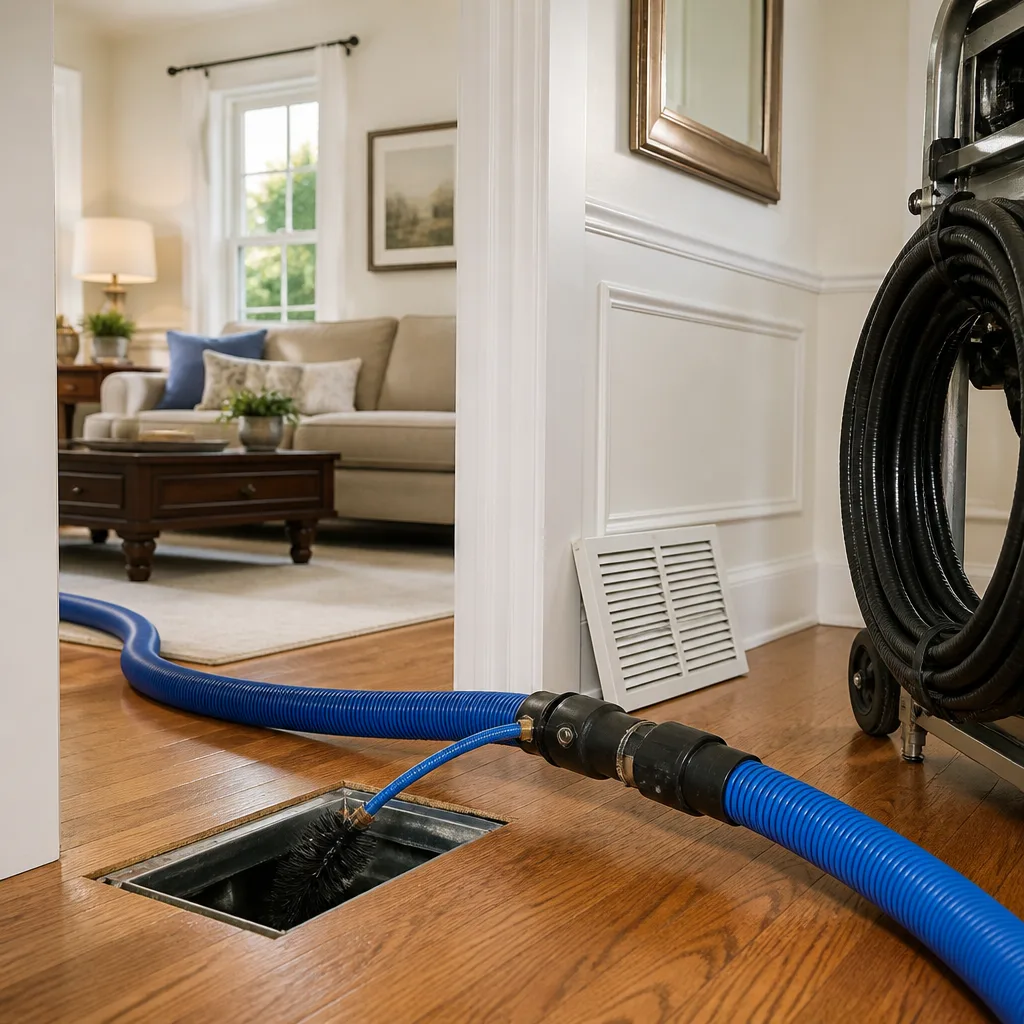
 Whole-home duct cleaning
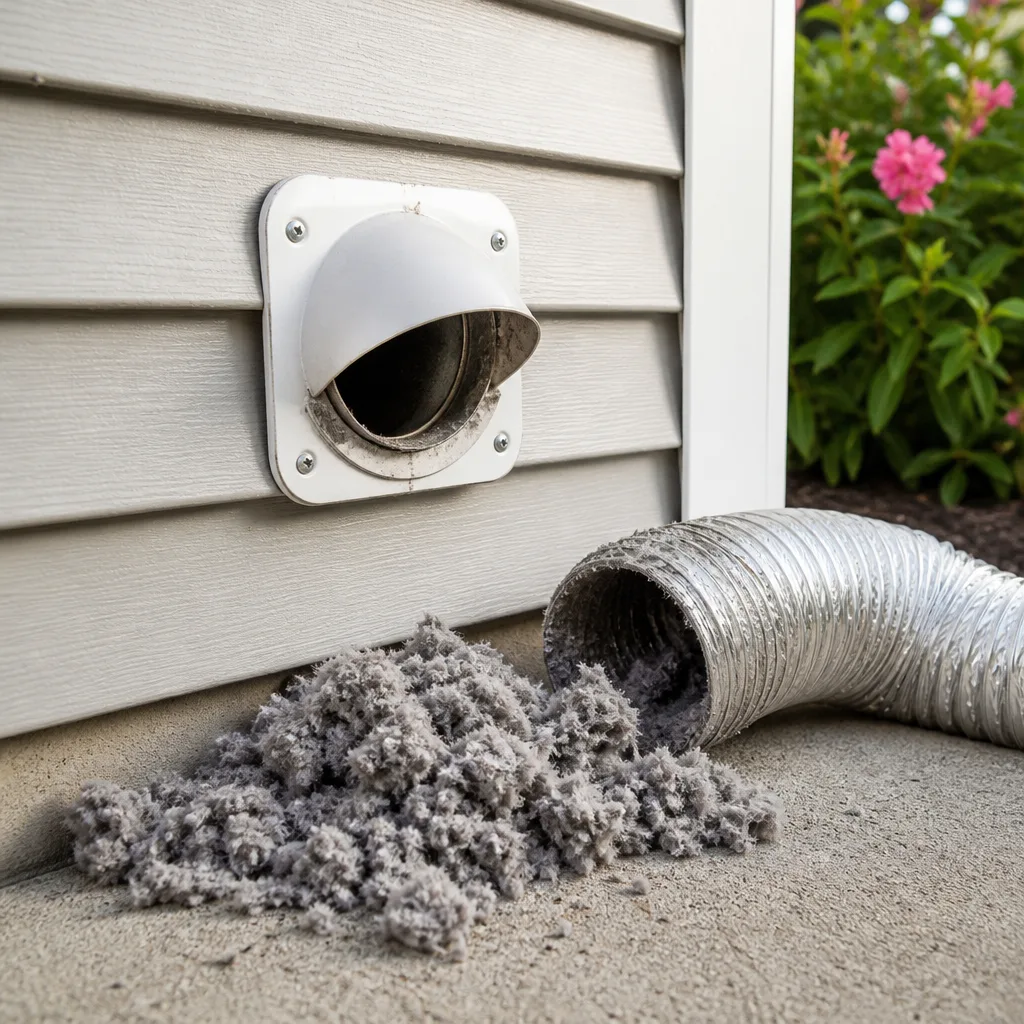 Dryer vent cleaning
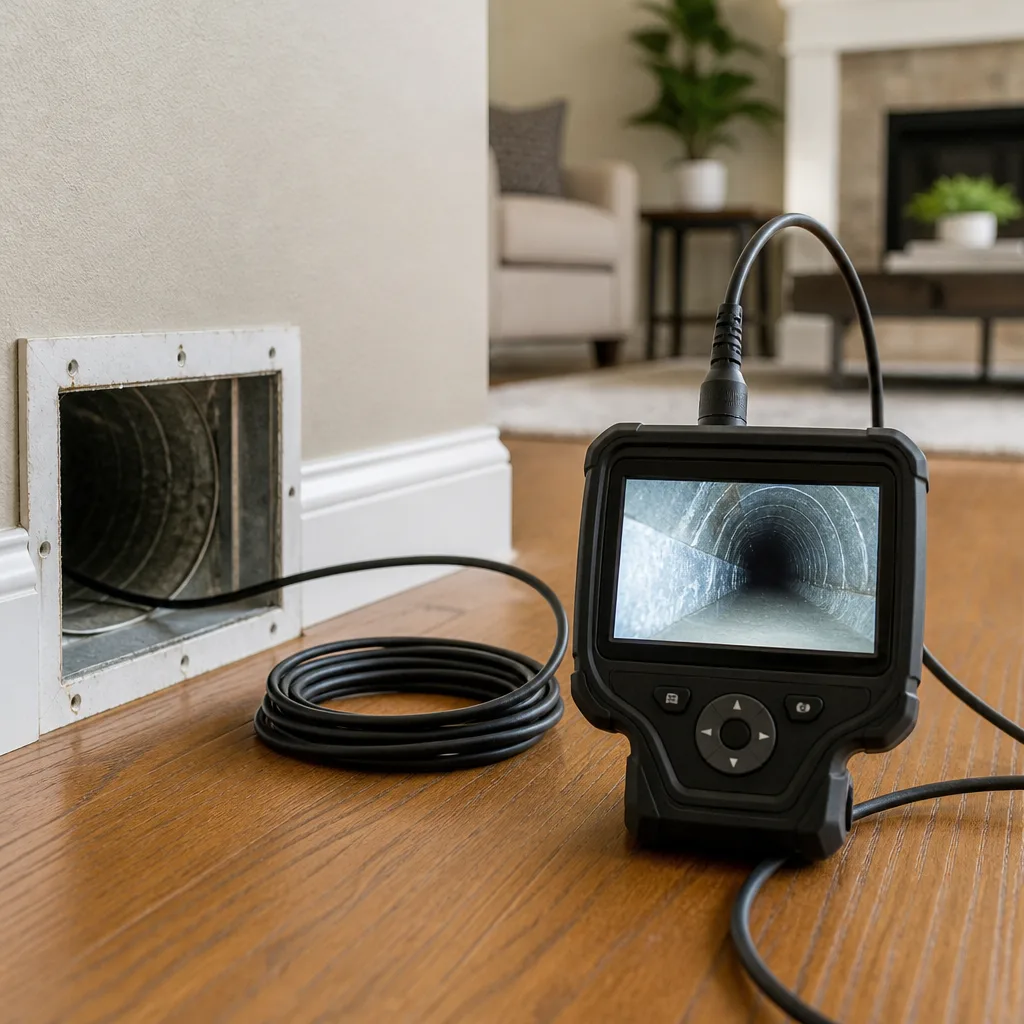 Camera inspection
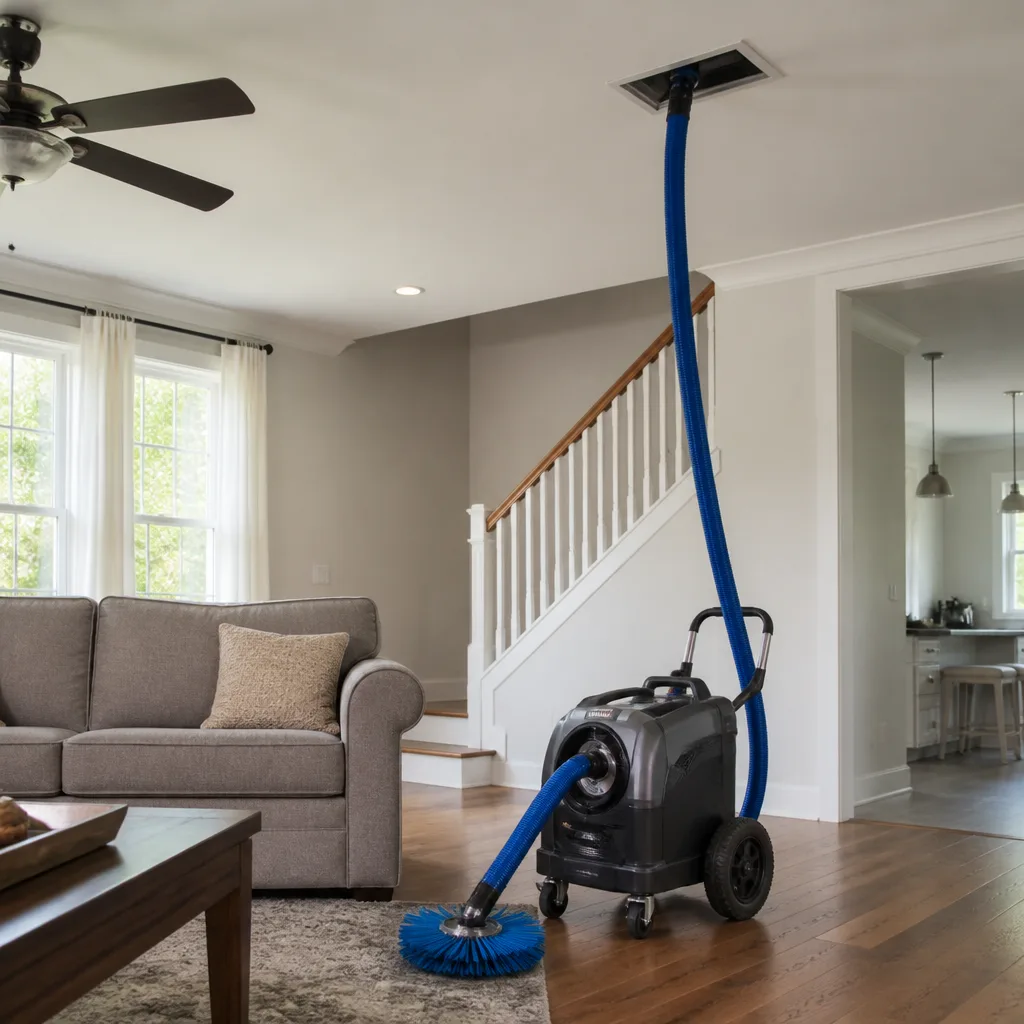 Sanitizing & deodorizing
Whole-system duct and dryer vent check with before-and-after photos - you see exactly what came out of your vents
That "$99 whole-house special" is a bait ad - the real number appears once they are in your hallway, or the "clean" is a shop-vac at the register. We photograph the inside of your ducts before and after instead.
Rotobrush Vent Sanitizing: The Brooklyn Owner’s Guide
If your Rotobrush vent sanitizing setup isn’t working the way it used to, we can get it matched, priced, and installed quickly. A Rotobrush vent sanitizing replacement in Brooklyn typically runs between $185 and $420 installed, depending on the model and which component has failed, and most swaps take under an hour once we’re at your door. You’ll usually notice the problem when the sanitizer stops dispersing evenly, the tank seal starts to leak, or your unit simply won’t hold pressure the way it did when it was new.
We’re an independent Brooklyn service provider, not affiliated with Rotobrush as a company, but we work on their gear every week. Paul Adeyemi and our crew have pulled apart enough Rotobrush units in Brooklyn basements and brownstone utility closets to know exactly which parts wear out first, what’s worth repairing, and when a clean replacement is the smarter money.
Key Takeaways
- We stock Rotobrush-compatible vent sanitizing components on our trucks and can usually match your part same-day.
- A written price comes before any work starts, always.
- Every replacement is backed by our 365-Day Done Right Promise.
- We’re an independent service provider, not a Rotobrush affiliate.
Which Rotobrush Models This Applies To
Rotobrush has shipped a few different sanitizing configurations over the years, and the part you need depends on which generation you own. The older aiR+ and early RotoSweep series used a gravity-fed sanitizing reservoir with a simple twist valve, while the newer models moved to a pressurized canister system that threads directly onto the air line. The two are not interchangeable, and that’s the most common compatibility gotcha we see in Brooklyn: someone orders what looks like the right part online, only to find the thread pitch or fitting size is off by a few millimeters.
Before you order anything, look for the silver label on the back of the unit near the power cord. It will list the model number, usually something like “RS-500” or “aiR+ 3.0,” and the date of manufacture. Take a photo of that label and the failed part itself before you call us. That saves everyone a drive to a wrong fit.
On the question of OEM versus aftermarket: Rotobrush’s own branded parts are well made and tolerances are consistent from batch to batch. We also carry quality aftermarket equivalents for the common wear items like seals, O-rings, and pickup tubes. For pressurized components and anything that touches the sanitizing chemical directly, we prefer the OEM or a direct-spec equivalent, because a hairline crack in a cheap aftermarket fitting is exactly the kind of thing that turns a $40 part into a wet utility closet floor.
Styles & brands we work with
Signs Your Rotobrush Vent Sanitizing Is Failing
Here are the symptoms we hear most often from Brooklyn owners, and what’s usually going on behind each one:
- The sanitizer comes out in sputters instead of a fine, even mist. Almost always a clogged pickup tube or a failing internal O-ring that’s letting air into the fluid line. The fix is usually a new seal kit, not a whole new unit.
- You smell the sanitizing solution strongly during operation. That’s a leak at the reservoir cap or the canister-to-line fitting. The vapor shouldn’t be noticeable when the system is sealed correctly. We see this a lot in older Brooklyn buildings where units get jostled going up and down narrow stairwells.
- The pump runs but no liquid reaches the nozzle. On pressurized systems, the internal bladder or check valve has failed. On gravity-fed units, the supply line has collapsed or kinked. Both are repairable if you catch them early.
- There’s a puddle or a faint stain under the unit after storage. A slow reservoir leak, often from a dried-out gasket after a winter in an unheated Brooklyn garage. Rotobrush seals don’t love freeze-thaw cycles, and we recommend pulling the tank if the unit is stored anywhere that drops below about 40 degrees.
- The nozzle drips after you shut the unit off. The shutoff valve isn’t seating fully anymore. That’s a $20-to-$45 part and about fifteen minutes of bench time. If you ignore it, the drip eventually works its way into the line and corrodes the fitting threads.
See the difference
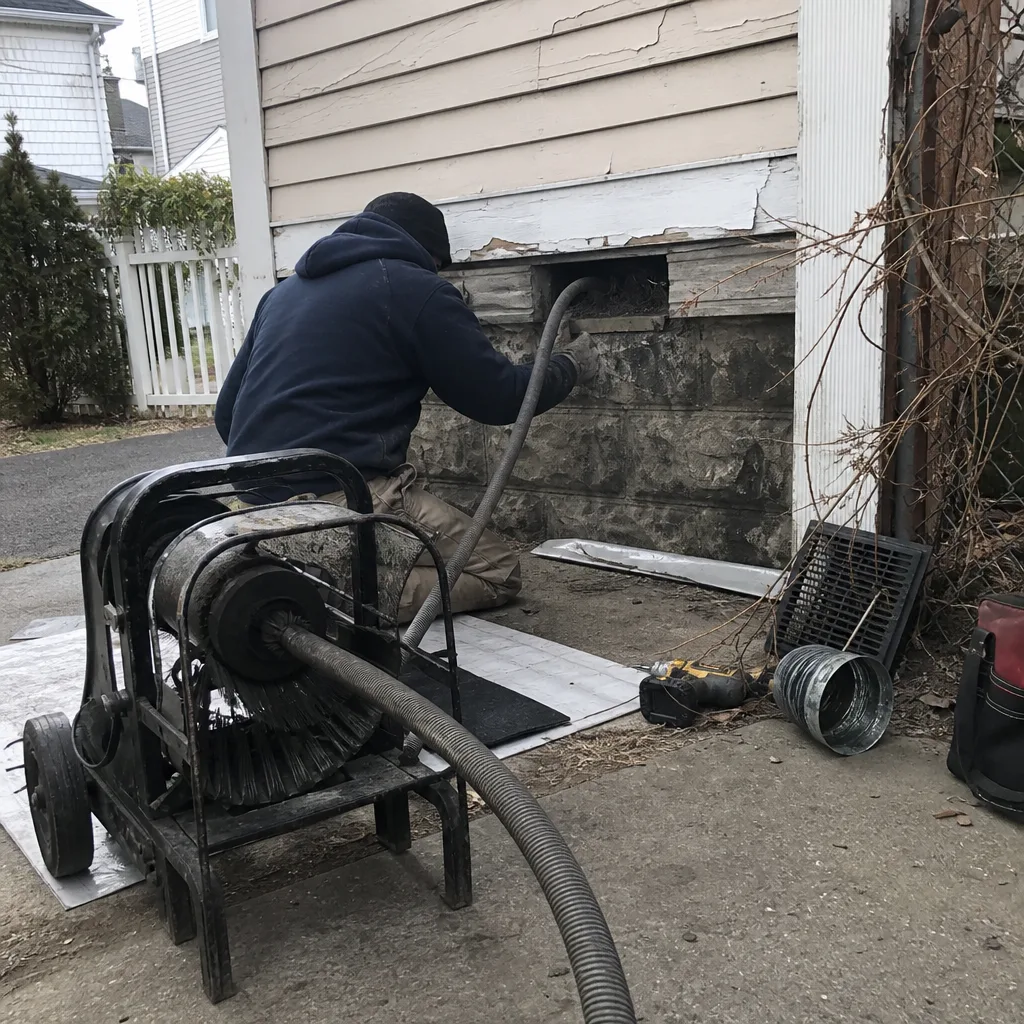 Before
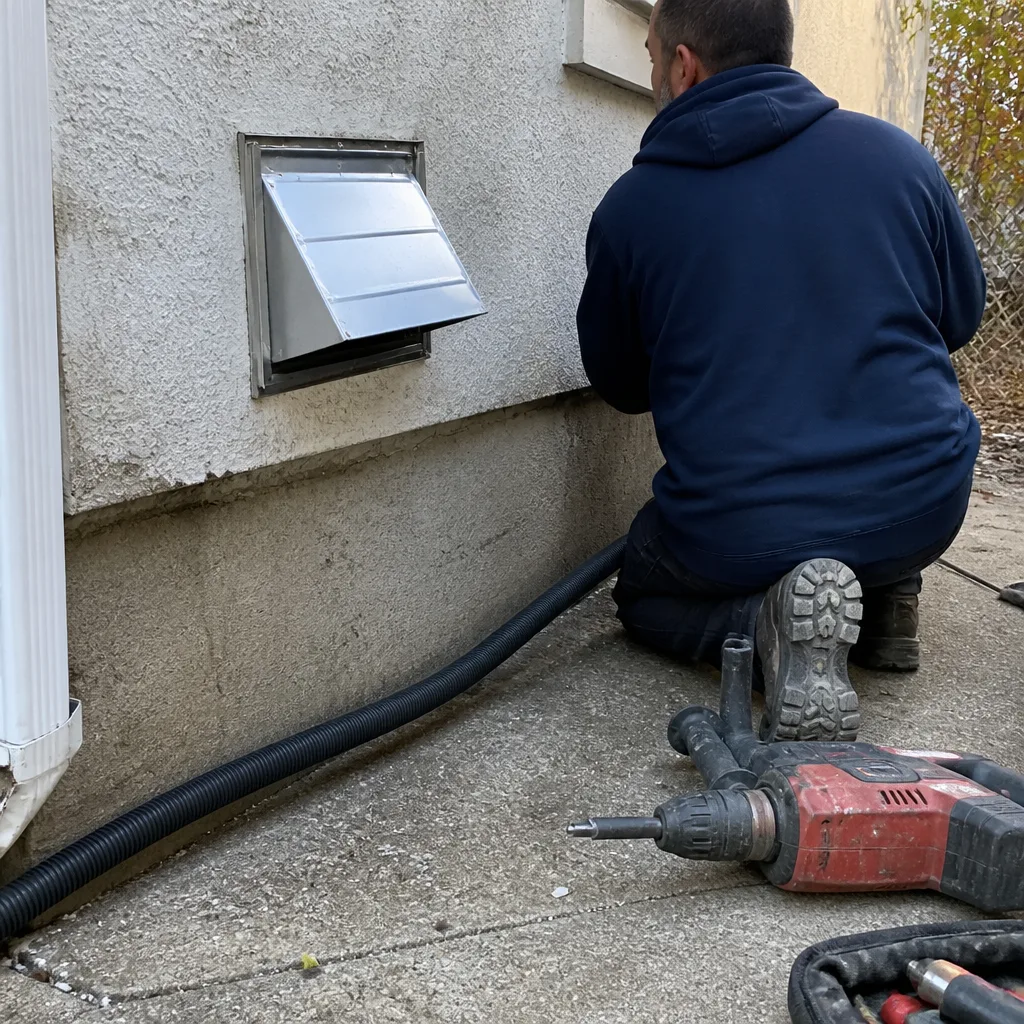 After
After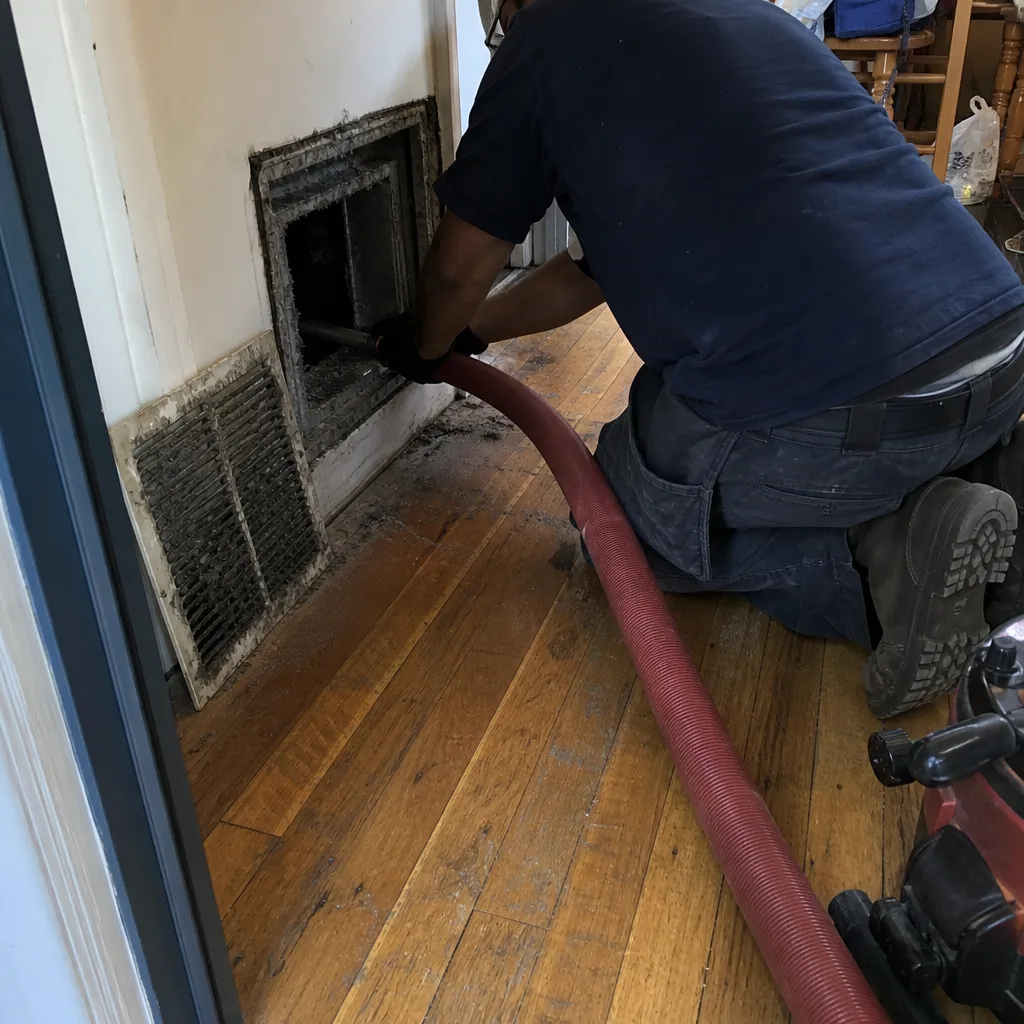 Before
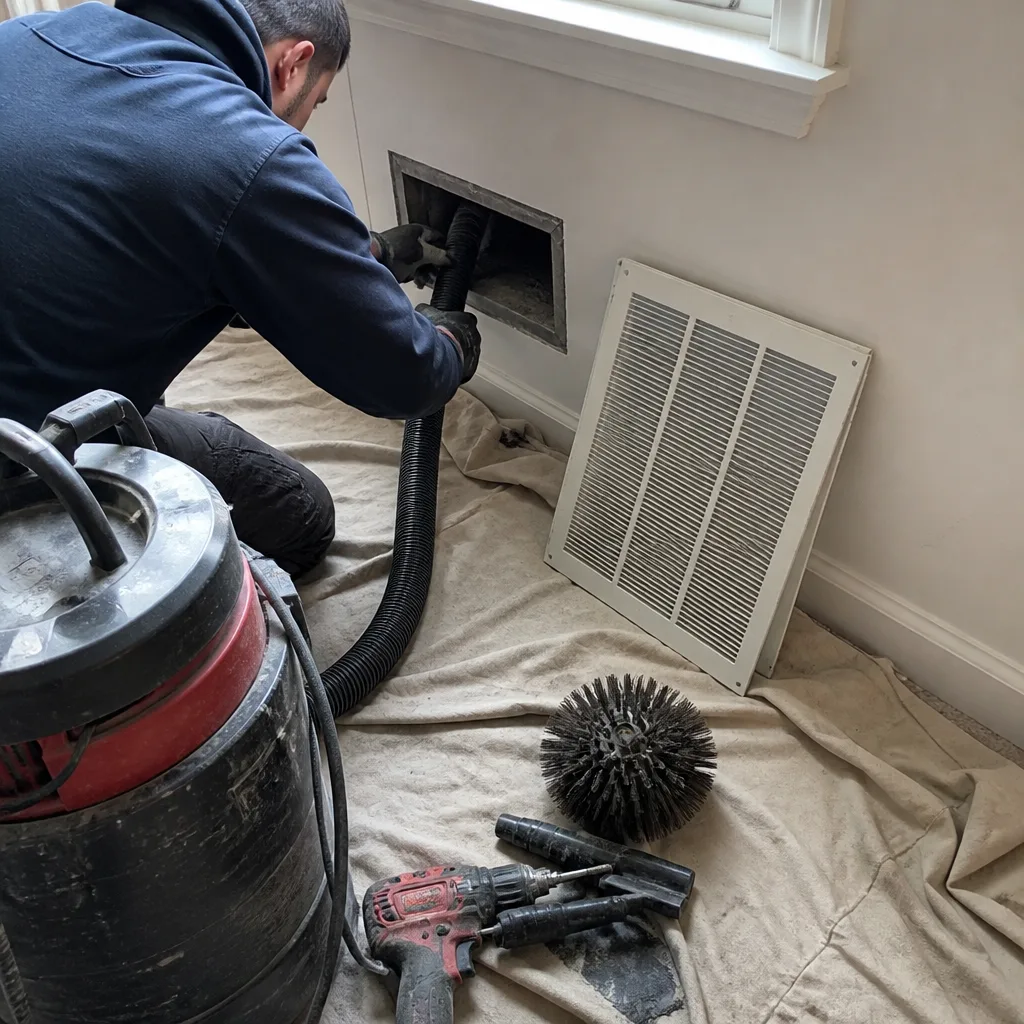 After
After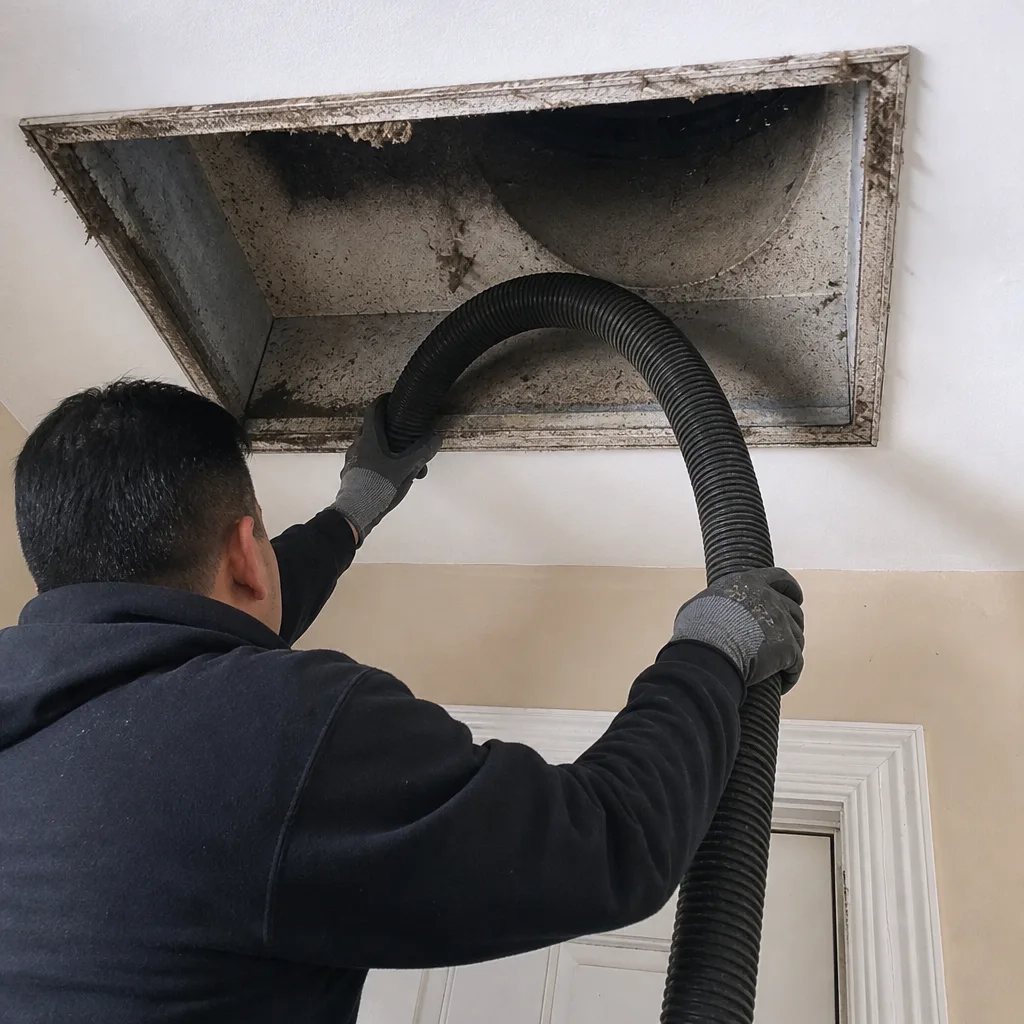 Before
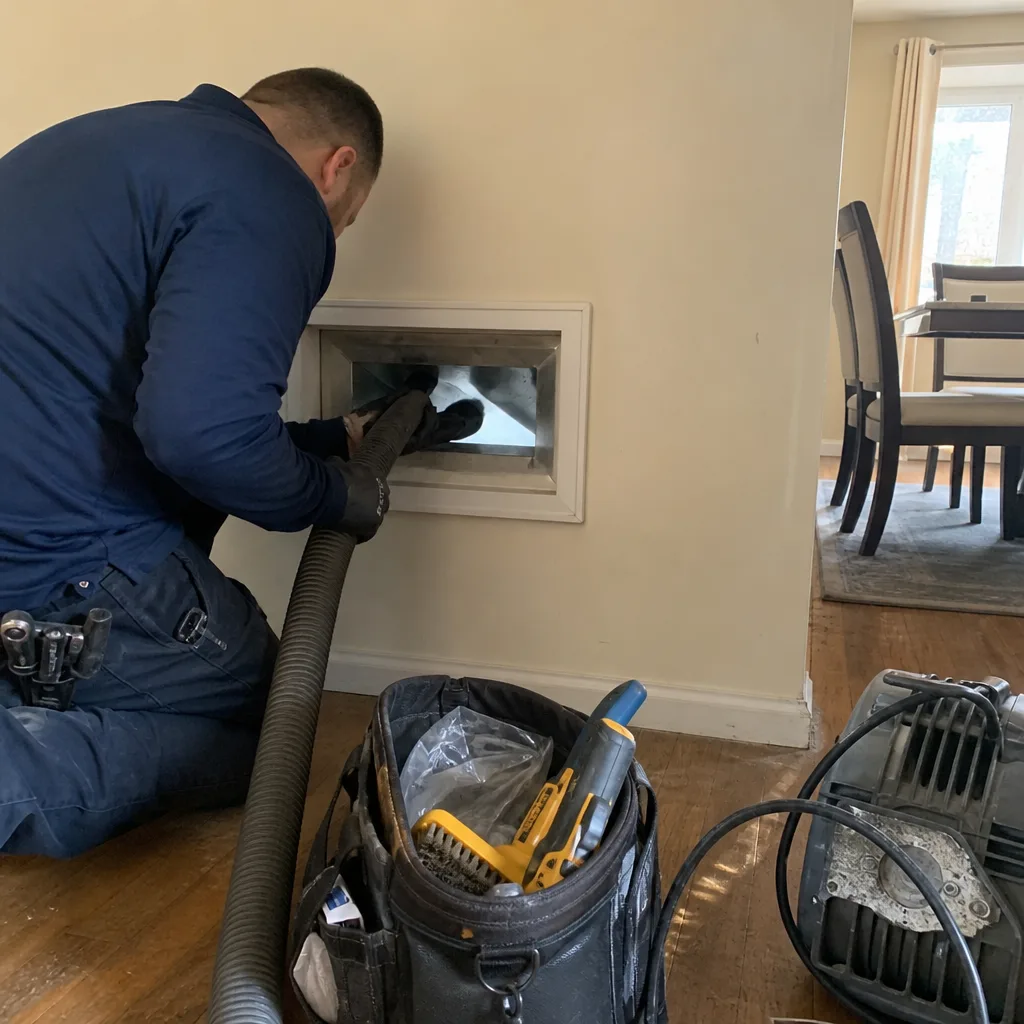 After
AfterReplacement Cost & What’s Included
In Brooklyn, a Rotobrush vent sanitizing repair or replacement usually lands between $185 and $420 installed. A basic seal-and-O-ring refresh on a standard unit sits at the low end. A full canister or pump replacement on a newer pressurized model sits at the higher end. The price difference is driven almost entirely by the part itself and whether we’re working on a gravity-fed or pressurized system.
Every quote includes the part, the labor, removal of the old component, and testing on the bench before we hand it back to you. We price the whole job as one flat number before we touch a single fitting, so there’s no parts-plus-labor surprise at the end. Our work carries the 365-Day Done Right Promise: if the part fails or the install wasn’t right, we make it right. That’s stamped on every job, not just offered when someone asks.
If you’re also scheduled for a duct cleaning visit with us, we’ll check your Rotobrush unit while we’re already there, no trip charge, and tell you honestly whether it needs anything. You won’t get a hard sell on a part that still has life in it.
DIY or Call Us?
There are a few things you can safely check on your own before calling. Is the reservoir cap tight? Is the supply line kinked? Is the nozzle visibly cracked? Those are all look-at-it checks, not tool-in-hand repairs, and they’ll tell us a lot when you call. A photo of what you’re seeing gets us halfway to a diagnosis before we even ring your bell.
But once you’re dealing with a pressurized canister or anything connected to the compressor line, stop there. A pressurized fitting that lets go while you’re undoing it can send a sharp spray of sanitizing solution into your eyes or across the room. That’s not a warning meant to scare a quote out of you; it’s just the honest reason we don’t talk Brooklyn homeowners through a pressurized swap over the phone. Bring it to us or let us come to you. Call (607) 536-9605 and we’ll sort out what you actually need. As Paul likes to say, “I will tell you what I see, what it costs, and what I plan to do about it, in that order.”
FAQs
In normal Brooklyn use, expect three to six years from the seals, O-rings, and pickup tube before something starts to leak or sputter. Units stored in unheated space during winter tend to fail on the shorter end because the gaskets harden faster.
If your unit is older than six years and you’re on your second seal kit, it’s often cheaper in the long run to replace the whole sanitizing assembly rather than chase one leak after another. Call (607) 536-9605 and we’ll tell you straight which side of that line your unit is on.
Yes, frequently. Seals, O-rings, pickup tubes, and shutoff valves are all repairable with the right parts and a clean bench. The cases where we recommend full replacement are cracks in the reservoir body itself or a failed pump on a pressurized unit, where the repair cost starts to rival the cost of new.
Most Rotobrush vent sanitizing replacements take between 30 and 60 minutes once we start. That includes testing the unit to make sure it’s dispersing a clean, even mist before we hand it back. If we’re already at your home for a duct cleaning, we can usually do it during the same visit.
We stock the common wear items: seal kits, O-rings, pickup tubes, shutoff valves, and canister fittings for both the gravity-fed and pressurized Rotobrush lines. If your unit needs something unusual, we can usually source it within a couple of days. We also stock parts for Lennox, Trane, and Carrier systems when the job calls for that instead.
Written by Paul Adeyemi, Owner, Mortons Air Duct Brooklyn at Mortons Air Duct Brooklyn, serving Brooklyn and nearby areas.