
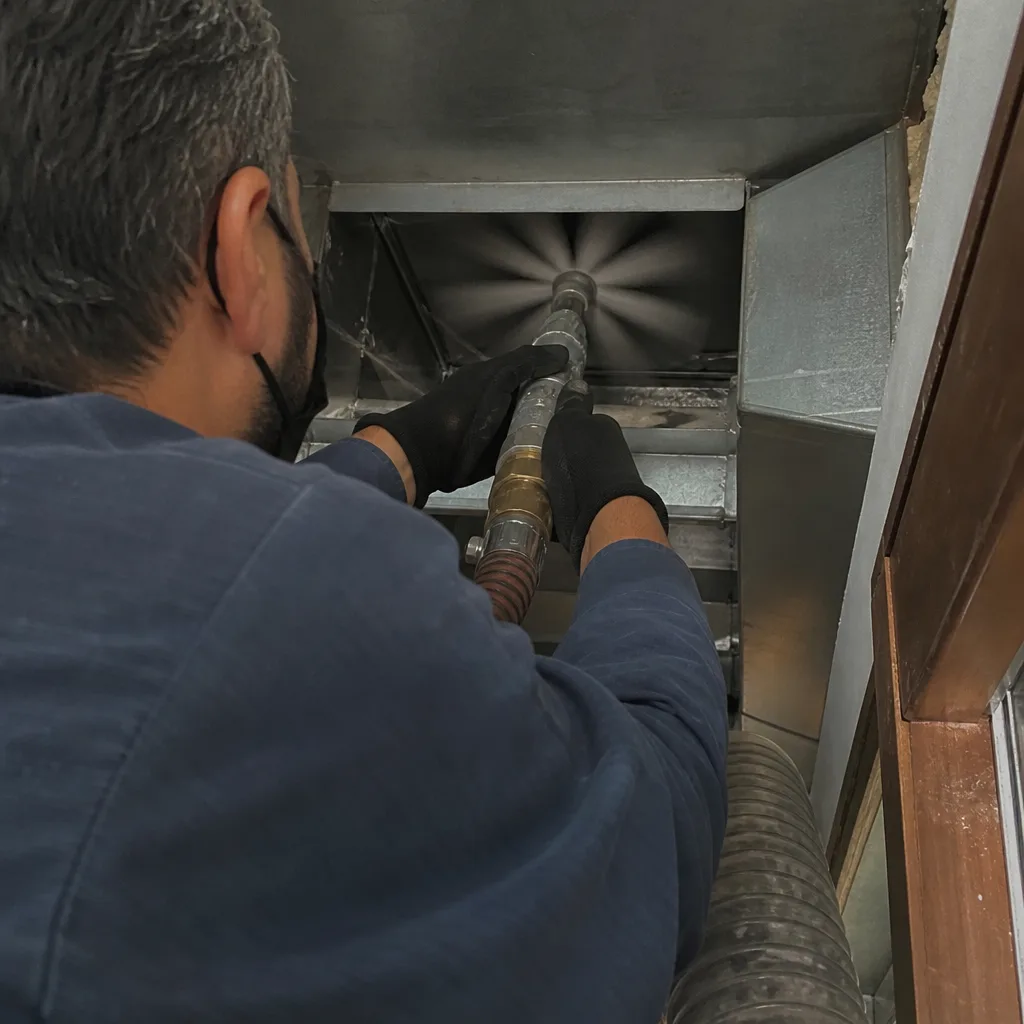
Last updated October 15, 2026
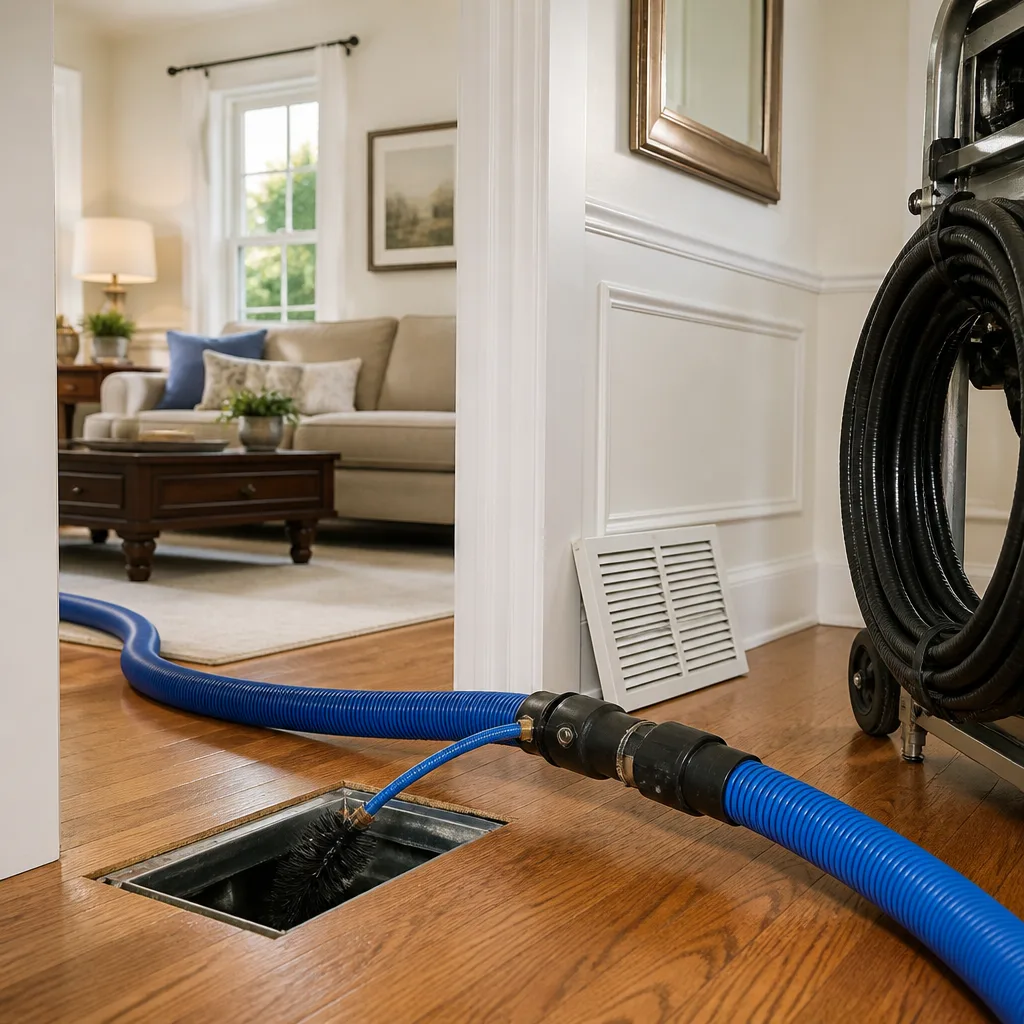 Whole-home duct cleaning
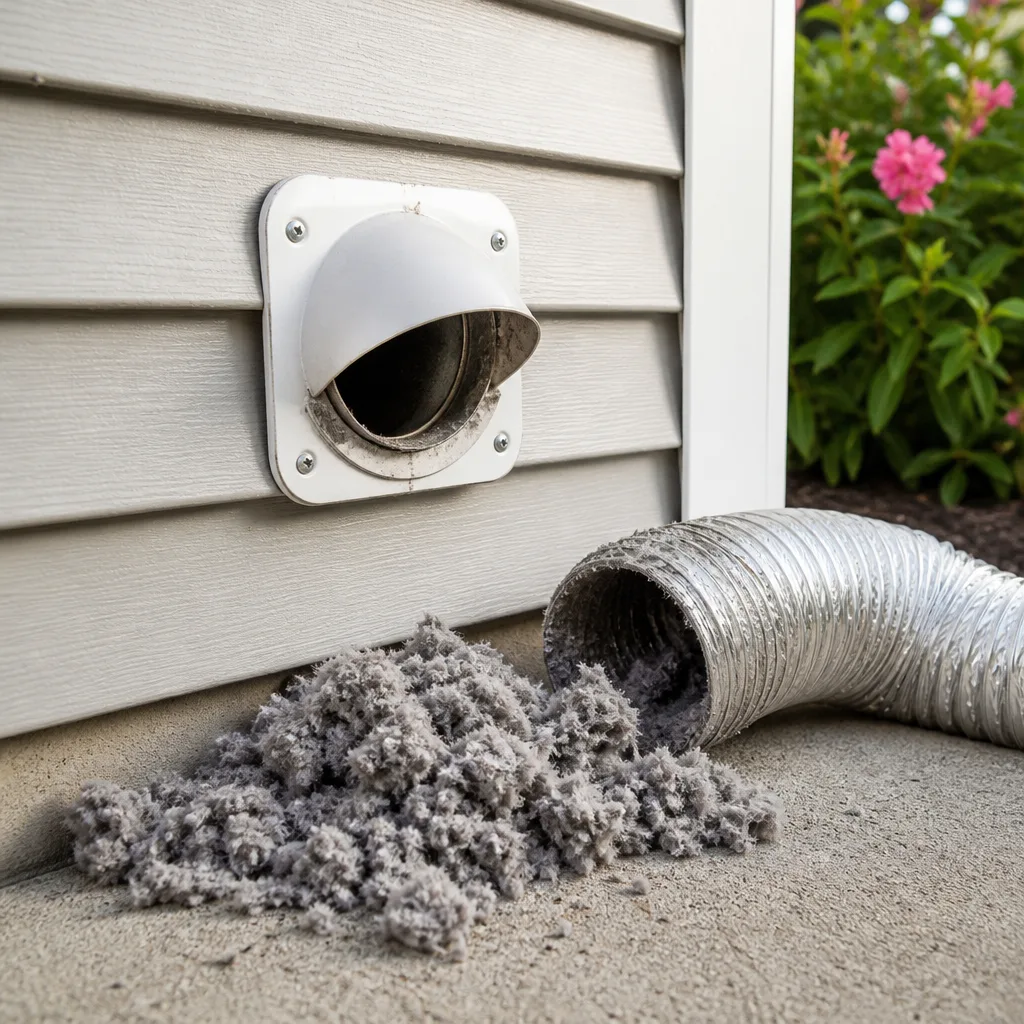 Dryer vent cleaning
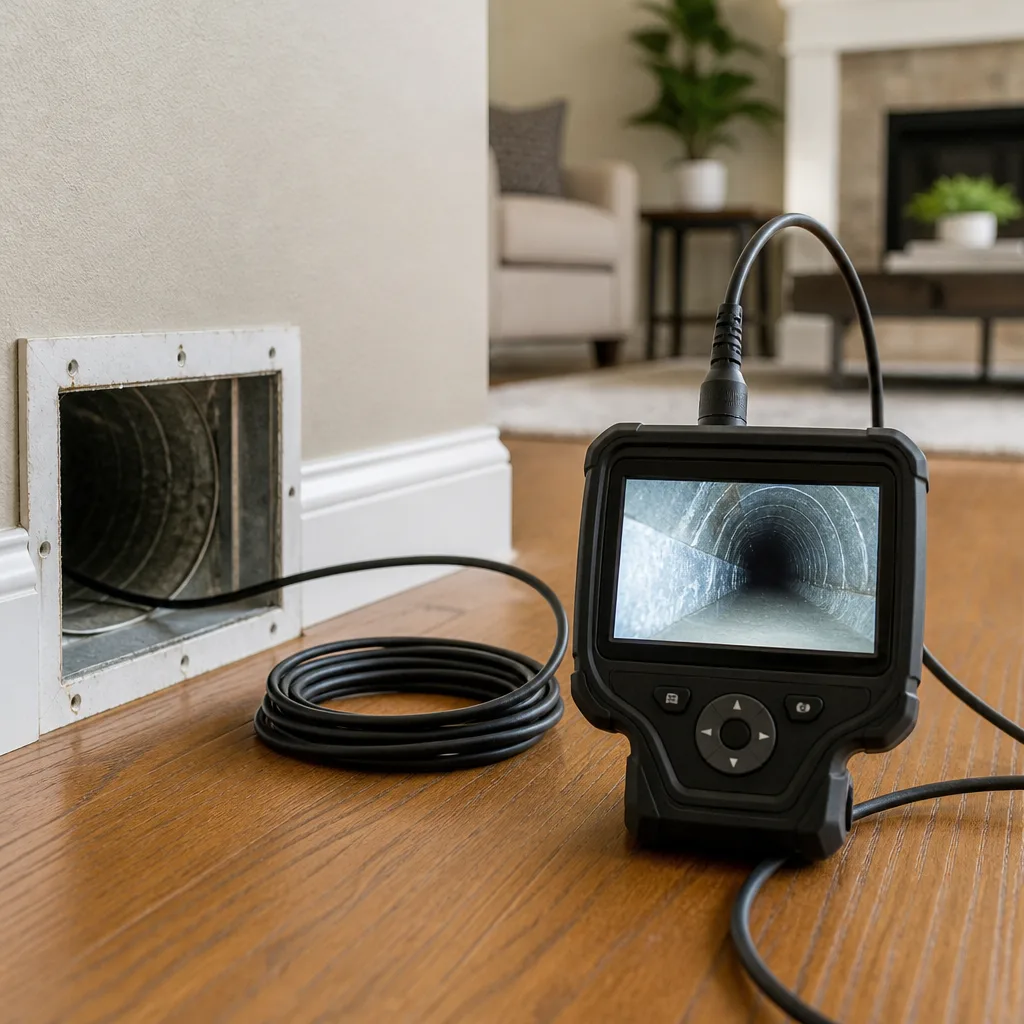 Camera inspection
 Sanitizing & deodorizing
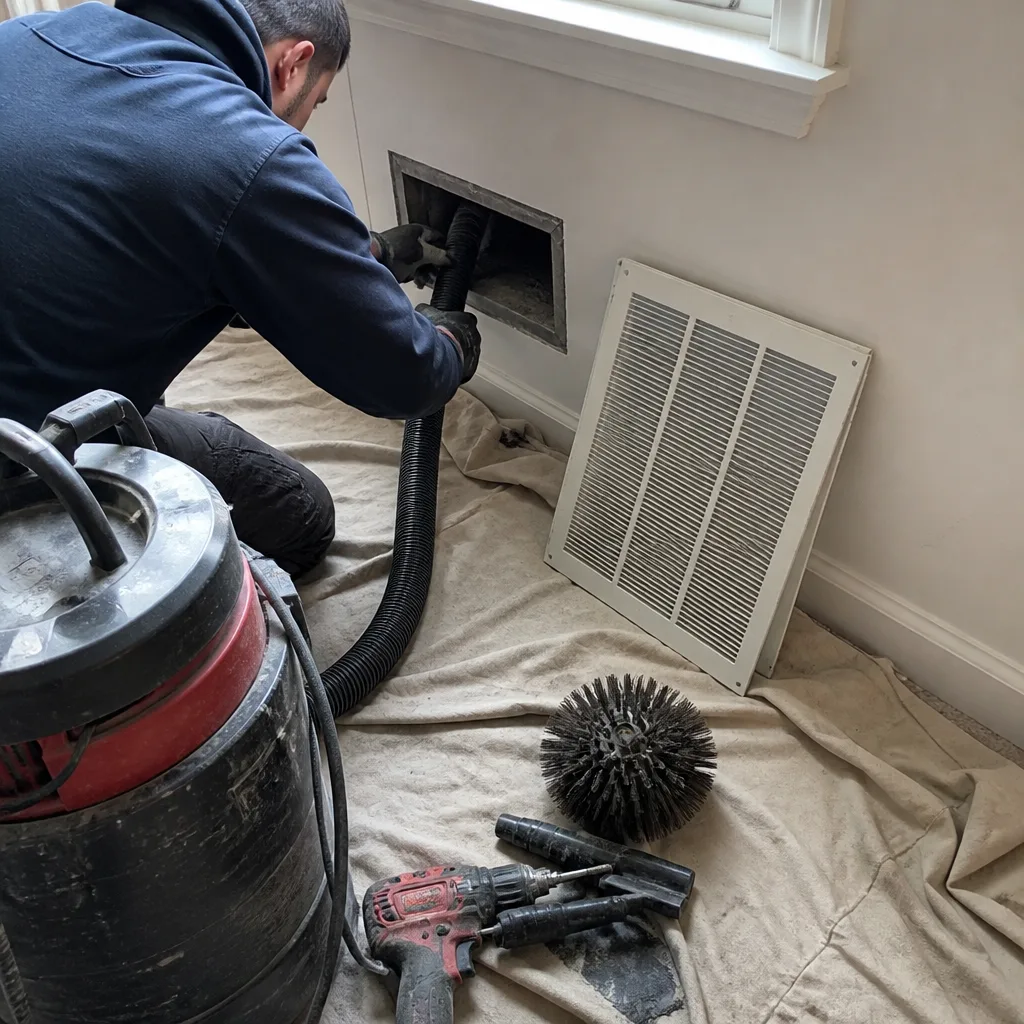
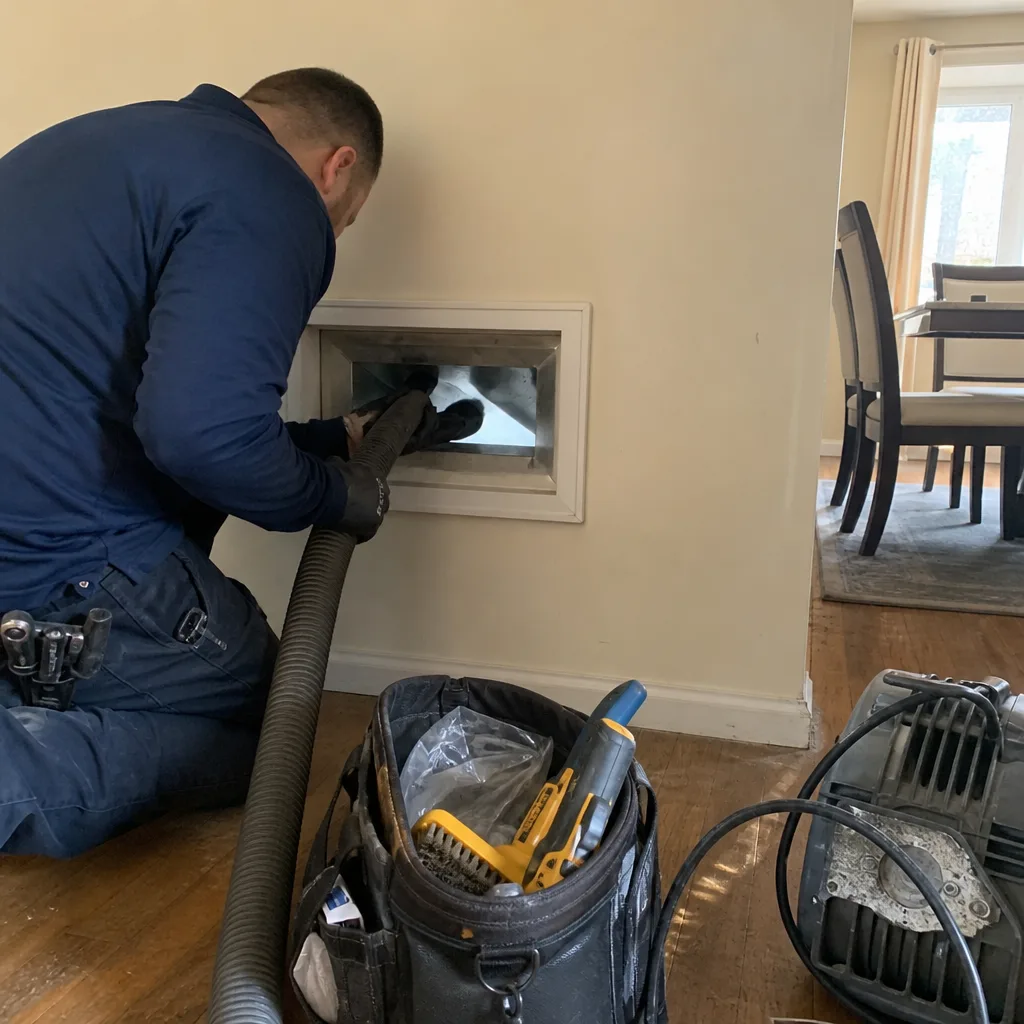
Whole-system duct and dryer vent check with before-and-after photos - you see exactly what came out of your vents
That "$99 whole-house special" is a bait ad - the real number appears once they are in your hallway, or the "clean" is a shop-vac at the register. We photograph the inside of your ducts before and after instead.
DIY vs Professional Air Duct Cleaning: The Brooklyn Homeowner’s Decision Guide
A standard shop vac and a dryer vent brush can clean the eight inches of duct you can see. A Rotobrush system cleans the forty linear feet you cannot, and what’s in those forty feet is exactly what’s affecting your air quality. Most Brooklyn homeowners who attempt a DIY duct cleaning don’t fail because they lack effort. They fail because the tools sold for this job at the hardware store were never designed to reach the full length of a duct run, and what remains behind is often loosened, not removed. This guide walks through the real equipment gap, what you can safely do yourself in a Brooklyn home, and when the decision stops being about preference and starts being about your family’s health.
Quick Answer
Professional Air Duct Cleaning services in Brooklyn cost between $450 and $900 for a typical single-family home or large apartment, take four to six hours, and use negative air machines with HEPA filtration that consumer tools cannot replicate. DIY duct cleaning costs $40 to $150 in supplies and can maintain accessible vent openings between professional visits, but it physically cannot clean the interior surfaces of duct runs. The right approach for most Brooklyn homes is a hybrid: professional cleaning every three to five years, with homeowner maintenance like filter replacement and register vacuuming in between.
Styles & brands we work with
Table of Contents
- The Equipment Gap: What Reaches Where
- What DIY Can Actually Do in a Brooklyn Home
- Why Older Brooklyn Homes Make DIY Riskier
- Cost Per Outcome: DIY Supplies vs Professional Service
- When Professional Cleaning Is a Health Decision, Not a Preference
- The One DIY Task That Genuinely Helps: Filters and Registers
- How a Professional Brooklyn Duct Cleaning Actually Works
- Red Flags When Hiring Any Duct Cleaning Company in Brooklyn
The Equipment Gap: What Reaches Where
The core difference between DIY and professional duct cleaning is not effort or technique. It is reach. Duct systems in Brooklyn homes, especially the prewar brownstones and mid-century brick rowhouses that make up so much of the borough’s housing stock, run through walls, floors, and ceilings. A typical duct run from a basement furnace to a second-floor bedroom register is twenty to forty feet long, with at least two 90-degree turns. The flexible brush kit sold at the hardware store is six to eight feet long. The shop vac hose is seven feet. Neither makes it past the first bend.
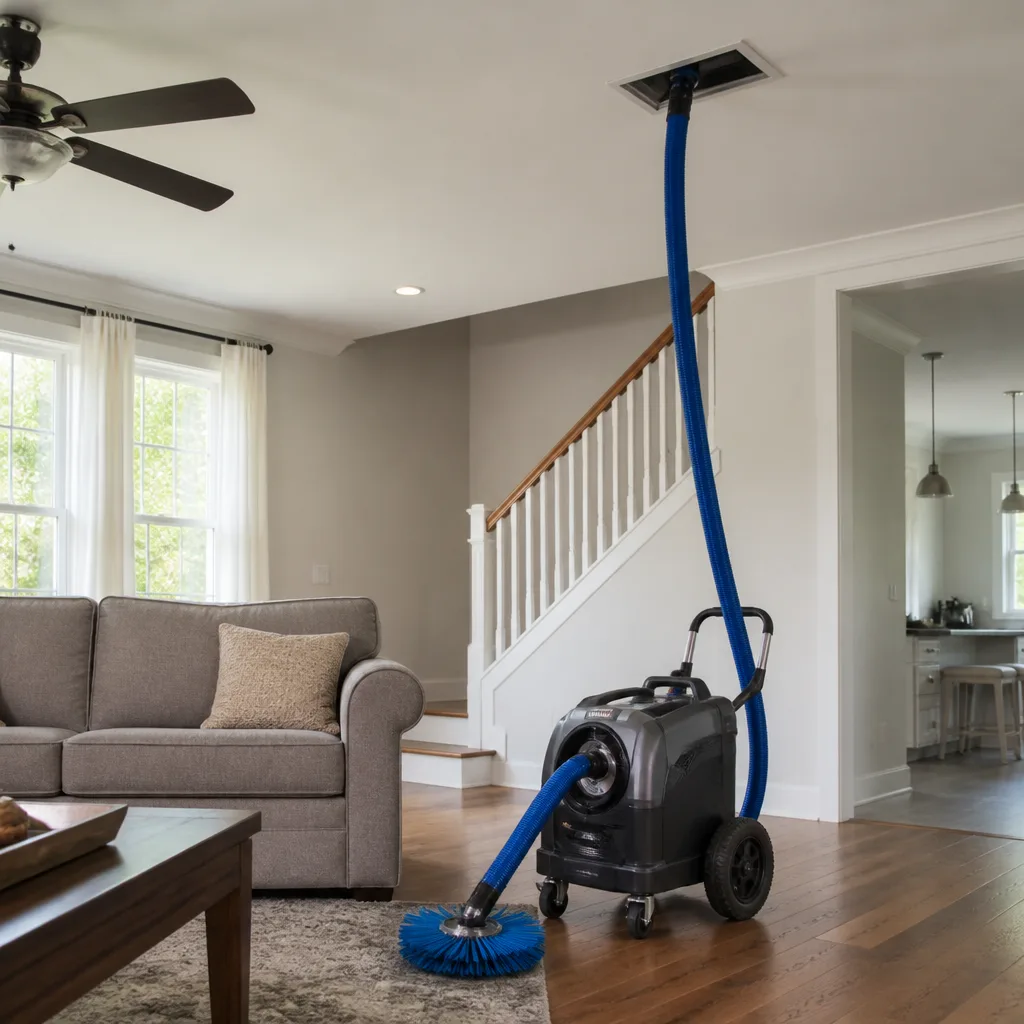
A professional system like the Rotobrush or Nikro machines we use at Morton’s solves this mechanically. The rotating brush head travels the full length of each duct run on a powered cable, agitating the caked dust, pet dander, and construction debris that has adhered to the duct walls. Simultaneously, a negative air machine creates continuous suction that pulls loosened material out of the home and through HEPA filtration before it can circulate into living spaces. The brush and the suction work together in the same pass. That pairing is the difference between cleaning a duct and simply moving dust around inside it.
Consumer-grade equipment does the opposite. A shop vac attached to one register creates positive pressure in one direction and suction at one point. What gets dislodged in the middle of the run stays in the middle of the run. Anything pushed toward the supply plenum settles there. Within a few weeks of normal airflow, that loosened material redistributes through the system, and the homeowner has spent a Saturday to create the same problem they had before, now with the dust aerated and mobile.
We see this pattern in Brooklyn homes across Park Slope, Bed-Stuy, and Bay Ridge. A homeowner spends an afternoon with a drill attachment and a shop vac, notices the first register looks cleaner, and assumes the entire system is clean. The reality is that the first eight inches are clean. The remaining thirty-plus feet are untouched, or worse, have been loosened from the duct walls and are now recirculating. That is the information gap this guide is designed to close.
What DIY Can Actually Do in a Brooklyn Home
We don’t discourage DIY maintenance. We teach it. There are specific tasks a Brooklyn homeowner can do safely and effectively between professional cleanings, and doing them well extends the lifespan of a professional clean. The key is understanding which tasks these are and not confusing them with the job they cannot replace.
Here are the DIY tasks that genuinely help:
- Replacing HVAC filters on schedule. In a Brooklyn home with central air, a 1-inch filter should be replaced every 60 to 90 days. Homes with pets or with radiators supplemented by window units that push dust around should check monthly. A clean filter is the single highest-impact thing a homeowner can do for air quality and system efficiency.
- Vacuuming accessible register openings. Remove the register cover, vacuum the opening as far as your hose reaches, and wipe the cover before reinstalling it. This keeps surface dust from being pulled into the system.
- Cleaning the dryer vent exterior hood. The exterior termination point of a dryer vent is accessible from outside the building or inside the laundry area. Lint accumulations here create airflow restriction and fire risk. Removing visible lint from the hood is safe and quick.
- Vacuuming the cold air return grille. This is usually the largest grille in the home, often in a hallway. It collects dust on its surface and in the first few inches of the return drop. Regular vacuuming of this grille reduces the volume of material entering the system.
These tasks are maintenance. They preserve condition. They do not clean the system. The distinction matters because many Brooklyn homeowners complete these steps, see less visible dust on the registers, and conclude the ducts are clean. The duct runs themselves, the supply plenum, the return drop, the blower compartment, and the evaporator coil remain untouched. That is the gap.
Why Older Brooklyn Homes Make DIY Riskier
Brooklyn’s housing stock is not like the suburban housing stock that most DIY duct cleaning guides are written for. The borough is full of homes built between 1880 and 1950, and many have been renovated repeatedly since. That history creates specific risks when someone pushes consumer tools into a duct system.
The first risk is flex duct. Many older Brooklyn homes that have had central air added after the fact, rather than built in from the start, use flexible ducting with an inner liner of plastic or foil over a wire coil. This liner tears. A spinning brush with stiff nylon bristles, or even a shop vac hose forced around a bend, can snag and rip the liner. Once it tears, the duct leaks conditioned air into the wall cavity, and insulation particles enter the airstream. A homeowner will not know this has happened because the damage is sealed inside the wall. A professional cleaning company in Brooklyn inspects duct material before selecting the tools, and works with brushes rated to match the duct type.
The second risk is deteriorated fiberglass insulation inside the ducts. Duct systems in older homes were often lined with fiberglass to reduce noise from the furnace. After forty to sixty years, that material degrades. It becomes friable, meaning it crumbles on contact. A homeowner who runs a drill brush through such a duct dislodges fiberglass particles that then circulate through the home. The same is true of ducts wrapped externally with insulation that has deteriorated and fallen into the duct. Professionals use negative air machines specifically so that particulates loosened during cleaning are captured at the point of agitation, not distributed into the living space.
The third risk is the return drop. In Brooklyn rowhouses, the return air often travels through a vertical cavity made of building materials, not sealed metal. These cavities collect decades of plaster dust, paint chips from renovations, and in some cases vermin debris. A homeowner cleaning the visible portion of a return grille has no way to access or clean the vertical drop behind the wall. A professional cleaning with inspection capability can see what is actually in that return cavity and address it with the negative air machine running.
Cost Per Outcome: DIY Supplies vs Professional Service
The cost conversation around duct cleaning usually starts and ends with the sticker price of a professional visit versus the cost of a DIY kit. That comparison misses what each dollar actually buys. Here is how the math works when you factor in outcome and lifespan.
A quality DIY attempt in Brooklyn means buying a drill brush kit with flexible rods, a vent cleaning attachment, and if the homeowner is serious, renting or buying a high-powered shop vac with a HEPA filter. Expect to spend:
- Drill brush kit with flexible rods: $40 to $80
- Vent and register cleaning attachments: $15 to $30
- Shop vac with HEPA filter and bags: $90 to $200
- Replacement filters for the home’s HVAC system: $10 to $30 each, replaced every 2 to 3 months
That puts the total DIY setup between $145 and $340 for the first attempt, not counting four to six hours of labor. And the outcome, as established above, is a partial clean that leaves the majority of the duct system untouched.
A professional air duct cleaning in Brooklyn runs between $450 and $900 depending on the size of the home and the number of vents. That is a larger single number than the DIY kit. But the professional clean addresses the entire system, not just the accessible openings, and its effective lifespan is three to five years. Spread over four years, a $700 professional clean costs $175 per year. The DIY supplies, replaced or refreshed each year for an attempted annual cleaning, cost $150 to $250 per year for a fraction of the result.
| Comparison Point | DIY Cleaning | Professional Cleaning (Brooklyn) |
|---|---|---|
| Upfront cost | $145 – $340 in supplies | $450 – $900 per system |
| Effective lifespan | 1 attempt, partial outcome | 3 – 5 years per clean |
| Cost per year averaged | $150 – $250 (annual re-attempt) | $150 – $200 |
| Duct coverage | 8 – 12 inches per register | Full duct run, plenum, return, coil |
| Time required | 4 – 6 hours of physical labor | 4 – 6 hours, done by a trained crew |
| Risk to duct liner | High in older Brooklyn flex duct | Low, tools matched to duct type |
The deeper cost problem with DIY is the false sense of completion. A homeowner who has cleaned registers and sees less dust on the furniture assumes the air is clean. That assumption delays professional service by years, during which time the actual duct interiors continue to accumulate. The cost is not the $100 brush kit. The cost is the years of deferred real cleaning while the system worsens. When a Brooklyn homeowner asks us about pricing, we walk through this exact math, because the honest answer is that DIY is not cheaper in any meaningful sense. It is a smaller number that buys a smaller outcome.
When Professional Cleaning Is a Health Decision, Not a Preference
For some households, the question is not whether professional duct cleaning would be nice to have. It is whether the air in the home is safe for the people breathing it. Certain Brooklyn household conditions push duct cleaning out of the maintenance category and into the health category.
Households with infants or toddlers. Children under two spend most of their hours indoors, and their respiratory systems are more sensitive to airborne particulates. A baby sleeping in a room served by a duct system that has not been cleaned in years is breathing air drawn through accumulated dust, dander, and whatever else the system holds. In our experience across Brooklyn, this is the single most common reason families call us when they do.
Households where asthma or allergies are present. Duct systems accumulate the specific particles that trigger respiratory symptoms: dust mites, pet dander, pollen, and cockroach allergens, which are a well-documented issue in parts of Brooklyn’s older housing stock. When an occupant has diagnosed allergies or asthma, the duct system is either working for them or against them. A professional clean removes years of accumulated trigger material in one service.
Homes where a renovation was recently completed. Sanding drywall, cutting tile, refinishing floors, and general construction all generate fine dust that enters the duct system through the return air. In Brooklyn, where renovations often happen in occupied homes with plastic sheeting rather than sealed zones, that dust circulates for months. A professional cleaning after a renovation removes construction dust from the system before it becomes permanent.
Homes with multiple pets. Pet dander is tiny, adhesive, and constantly replenished. It bonds to duct walls and to the blower motor. In homes with two or more pets, the duct system can develop a visible coating of hair and dander within two to three years. The smell of a home with pets is often not coming from the furniture. It is coming from the ducts cycling that dander through the space on every heat or AC cycle.
After illness in the home. Many families call us after a serious respiratory illness or a prolonged flu season because they want the home air reset. There is no scientific claim that duct cleaning prevents illness, and we don’t make one. What we can say is that a home recovering from a household-wide illness benefits from a clean system that is not adding particulate burden to recovering lungs.
In each of these scenarios, the question is not whether a shop vac can help. It cannot, not in any meaningful way. The question is whether the household wants the system cleaned, or simply wants the registers wiped. These are different jobs with different outcomes.
The One DIY Task That Genuinely Helps: Filters and Registers
Between professional cleanings, there is one category of DIY work that matters more than everything else combined: filter discipline and register maintenance. Here is a simple schedule that works for Brooklyn homes.
- Replace the HVAC filter every 60 to 90 days. In homes with pets, replace every 60 days. Write the date on a small piece of tape on the filter frame, or set a phone reminder. A clogged filter forces the blower to work harder and pulls air through the accumulated dust on the filter itself.
- Vacuum the return grille monthly. The return grille is where air enters the system. It accumulates dust, hair, and lint on its surface and in the first few inches of the duct behind it. A quick vacuum with a brush attachment keeps this material from entering the system.
- Wipe register covers with a damp cloth. Supply registers collect dust on the vanes. A damp cloth or a microfiber towel removes it without pushing it into the duct. Do this quarterly.
- Clear the dryer vent exterior hood. Every time you clean the lint trap in the dryer, step outside and check the exhaust hood for visible lint. In Brooklyn buildings, the exhaust often terminates in an alleyway or at the rear facade and is easy to reach from a fire escape or ground level.
- Keep the area around the furnace clean. The furnace or air handler in a Brooklyn basement or utility closet draws air from its surroundings. Keep the area swept and free of construction dust, paint cans, and stored materials that shed fibers.
None of these tasks replace a professional cleaning. What they do is extend the interval between professional cleanings and keep the most visible materials out of the system. We provide these instructions to every Brooklyn customer after a job, because we would rather work in homes where the system is cared for between visits. A maintained system cleans faster, cleans cleaner, and stays cleaner longer.
How a Professional Brooklyn Duct Cleaning Actually Works
When air duct cleaning in Brooklyn is done correctly, it follows a specific sequence. Understanding the sequence helps a homeowner evaluate any company they are considering, including us.
- Inspection. The technician examines the system: furnace type, duct material, access points, and whether the system has ever been cleaned. In older Brooklyn homes, this inspection frequently finds surprises, including disconnected ducts, missing sections, or insulation that has fallen into the duct.
- Protection. The work area is protected. At Morton’s, that means shoe covers on every technician, drop cloths placed under the duct access points, and furniture moved away from the work zone with the homeowner’s approval. This is the Cedarwell Care Promise in practice, not a slogan.
- Access and connection. The negative air machine is connected to the system. Its purpose is to put the entire duct system under suction so that any material dislodged during cleaning is pulled to the machine’s HEPA filter, not blown into the rooms.
- Agitation. The rotating brush travels each duct run, loosening material from the walls. The brush size and stiffness are matched to the duct material. In older flex duct systems, a softer brush is used to avoid liner damage. This is where the Rotobrush and Nikro equipment makes the difference, because a professional system reaches the full run while the consumer tool reaches a few inches.
- Plenum, return, and coil cleaning. The areas a homeowner never sees, including the supply plenum above the furnace, the return drop, and the evaporator coil if accessible, are cleaned. These areas hold a disproportionate share of the system’s accumulated debris.
- Verification. Before the crew leaves, a photo of the cleanup is provided, showing that the home was left as it was found, or better. The homeowner sees proof of the work, not just a claim.
A complete professional cleaning in a Brooklyn home takes four to six hours depending on the number of vents and the accessibility of the system. The written quote provided before the job starts includes the total price, not an estimate that will change. That matters in an industry where the final invoice does not always match the initial promise.
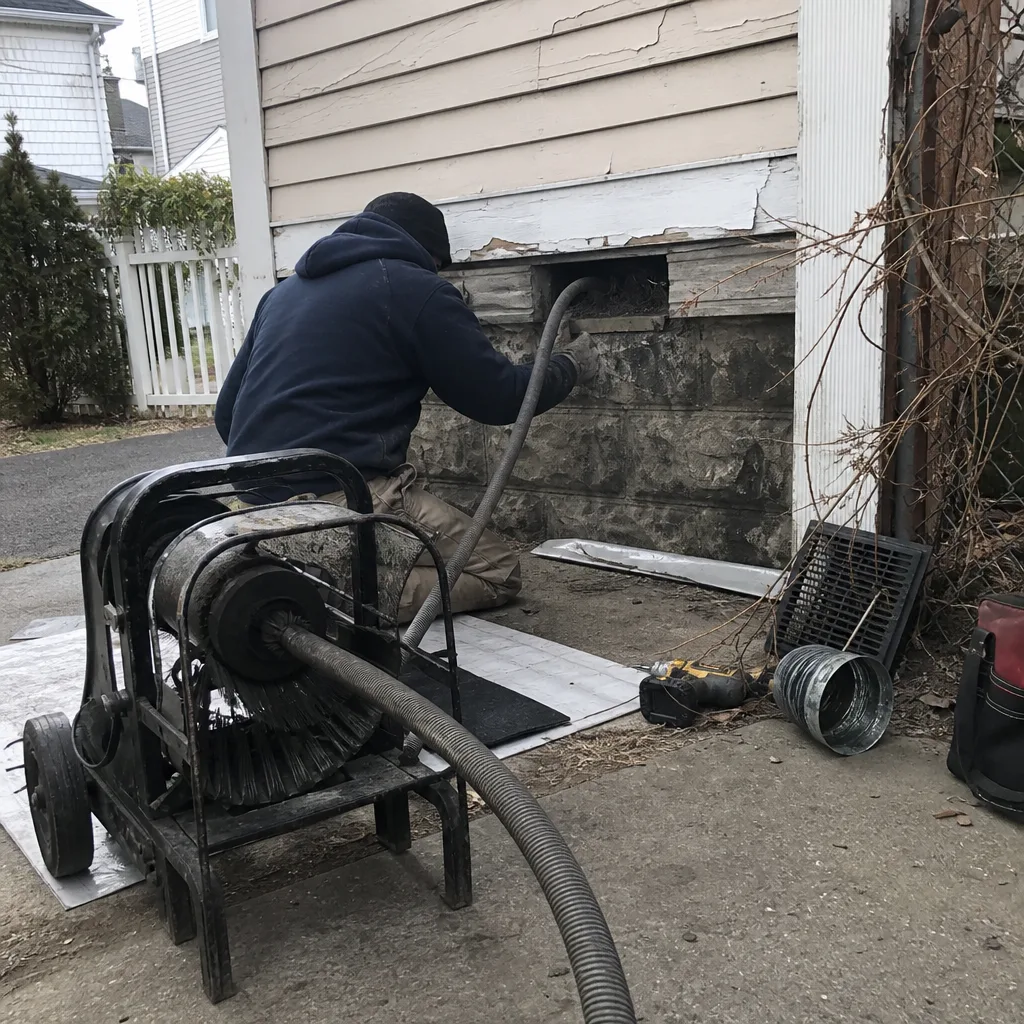
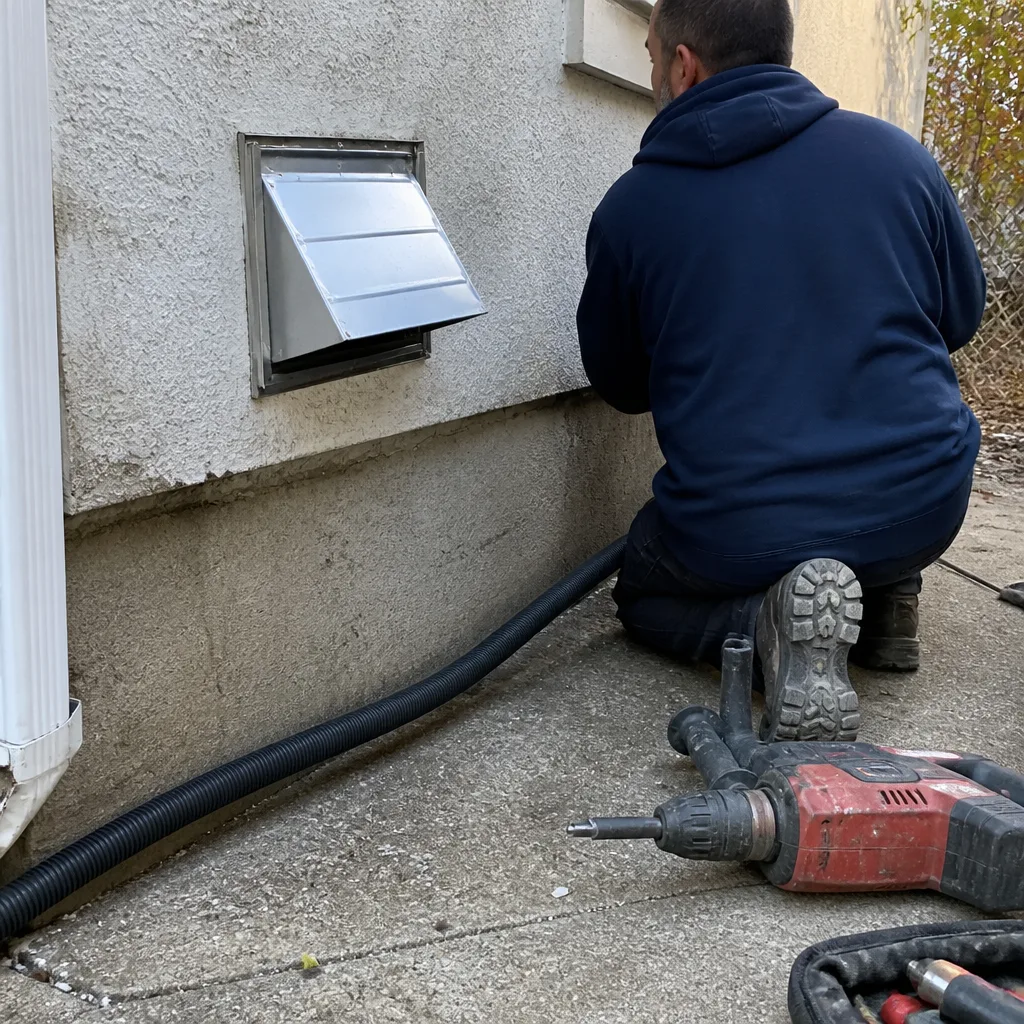
For homeowners in Brooklyn who also need dryer vent cleaning in Brooklyn, the same professional equipment is used on a smaller scale. The dryer vent is a single run but often a long one, particularly in older buildings where the dryer is far from the exterior wall. Lint accumulation in that run is a fire hazard and a drying-efficiency problem, and it is cleaned with the same reach that a consumer brush cannot match.
Red Flags When Hiring Any Duct Cleaning Company in Brooklyn
The duct cleaning industry in Brooklyn includes excellent local companies and operators whose business model depends on a lowball upfront price and a much larger invoice once the truck is parked outside. Our How to Hire a Air Duct Cleaning Contractor in Brooklyn: A Step-by-Step Guide covers how to tell them apart before the technician arrives, which is a skill worth learning.
- A quote given over the phone without any questions about the home. The number of vents, the age of the system, and the accessibility of the ducts all affect a legitimate quote. A company that quotes one price over the phone without asking how many vents exist or what kind of building it is, is reading from a script, not a price sheet.
- A price quoted per vent instead of per system. Per-vent pricing is the most common bait-and-switch structure in this industry. The headline number is for a few vents, and the final invoice is for whatever number the technician finds once inside. Legitimate companies price the whole system, not the vent count.
- No written price before work starts. In Brooklyn, a homeowner should never authorize duct cleaning without a written price in hand. At Morton’s, that written price is provided on every job before anything is touched, and the invoice matches it. That is a promise we make in writing, not a verbal assurance.
- No mention of equipment brands. Companies using professional equipment from manufacturers like Rotobrush, Nikro, Abatement Technologies, and Guardsman are generally willing to say so. Companies that cannot name their equipment are often using consumer-grade tools the homeowner could buy themselves.
- No references to protection of the home. A company that cannot describe what it will do to protect floors, furniture, and the rest of the home before the work begins does not have a process for that. Shoe covers and drop cloths are minimum standards, not extras.
The presence of any one of these red flags doesn’t guarantee a problem. The presence of several means the homeowner should keep looking. In Brooklyn, with its dense concentration of housing and its older building stock, the cost of a bad duct cleaning is not just the money. It is the home’s air quality for years afterward.
Common Mistakes to Avoid
- Assuming a clean register means a clean system. The visible portion of a register is the first inch of a system that runs for dozens of feet inside walls. Clean registers are cosmetic; clean ducts are mechanical. Conflating the two is the most common error we see in Brooklyn homes.
- Using a leaf blower to clean ducts. A leaf blower forces loose dust through the system and out the registers, and it also forces it into the blower motor, the coil, and every seam in the ductwork. This “trick” circulates more particulate than it removes and can damage the blower assembly.
- Buying a consumer air duct cleaning kit and expecting professional results. The kits sold at hardware stores are useful for register maintenance. They cannot replicate the reach of powered brush systems and negative air machines. Spending $80 expecting a $700 outcome guarantees disappointment.
- Cleaning ducts during a renovation instead of after. Duct cleaning performed mid-renovation is undone within days as new dust enters the system. The correct sequence is renovation first, then professional duct cleaning, then filter replacement.
- Deferring professional cleaning because “we just changed the filters.” Filters clean the air entering the furnace; they do not clean the ducts. A home with clean filters and dirty ducts still circulates air through the accumulated material in the duct runs.
- Choosing a duct cleaning company on price alone in Brooklyn. The lowest quote in this industry is often structured to be doubled at the door. A legitimate system-wide cleaning in Brooklyn has a real cost, and prices quoted well below that cost are not discounts. They are down payments on an upsell.
See the difference
 Before
 After
After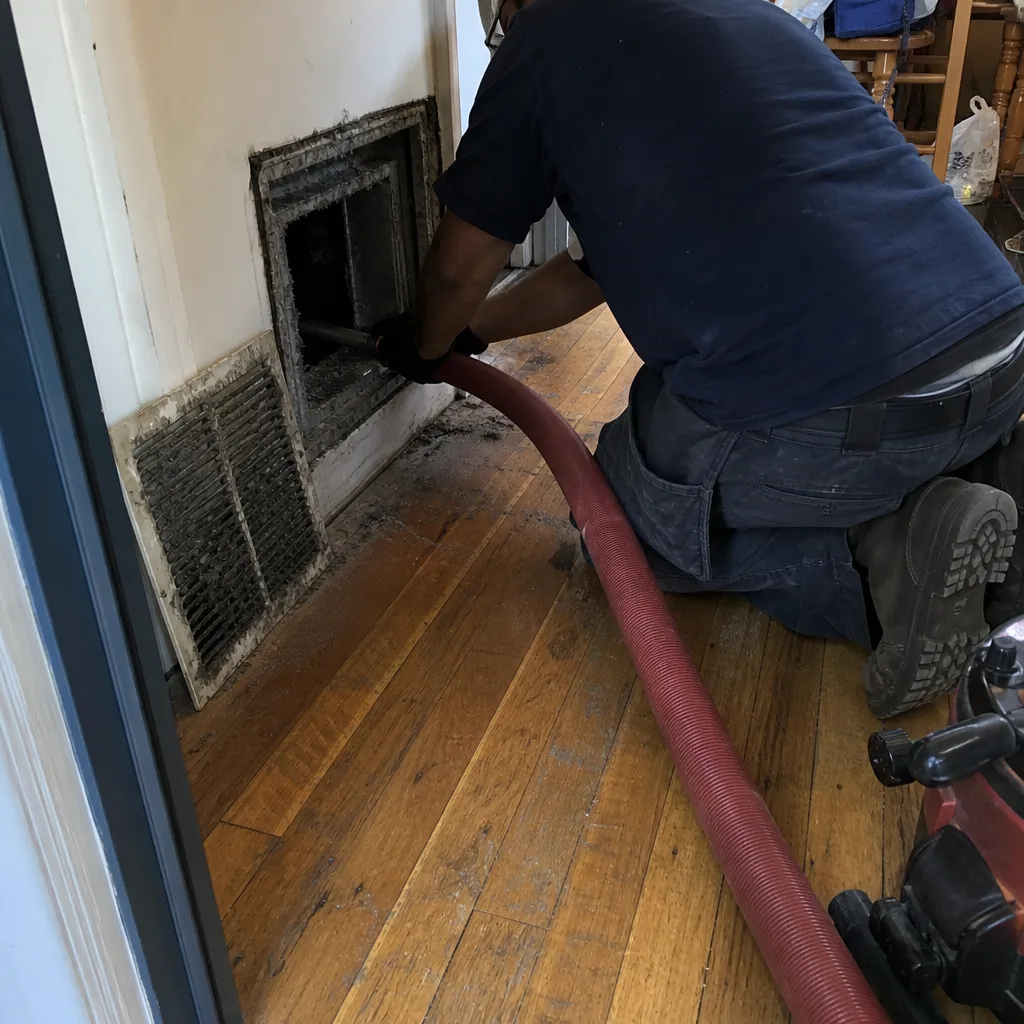 Before
 After
After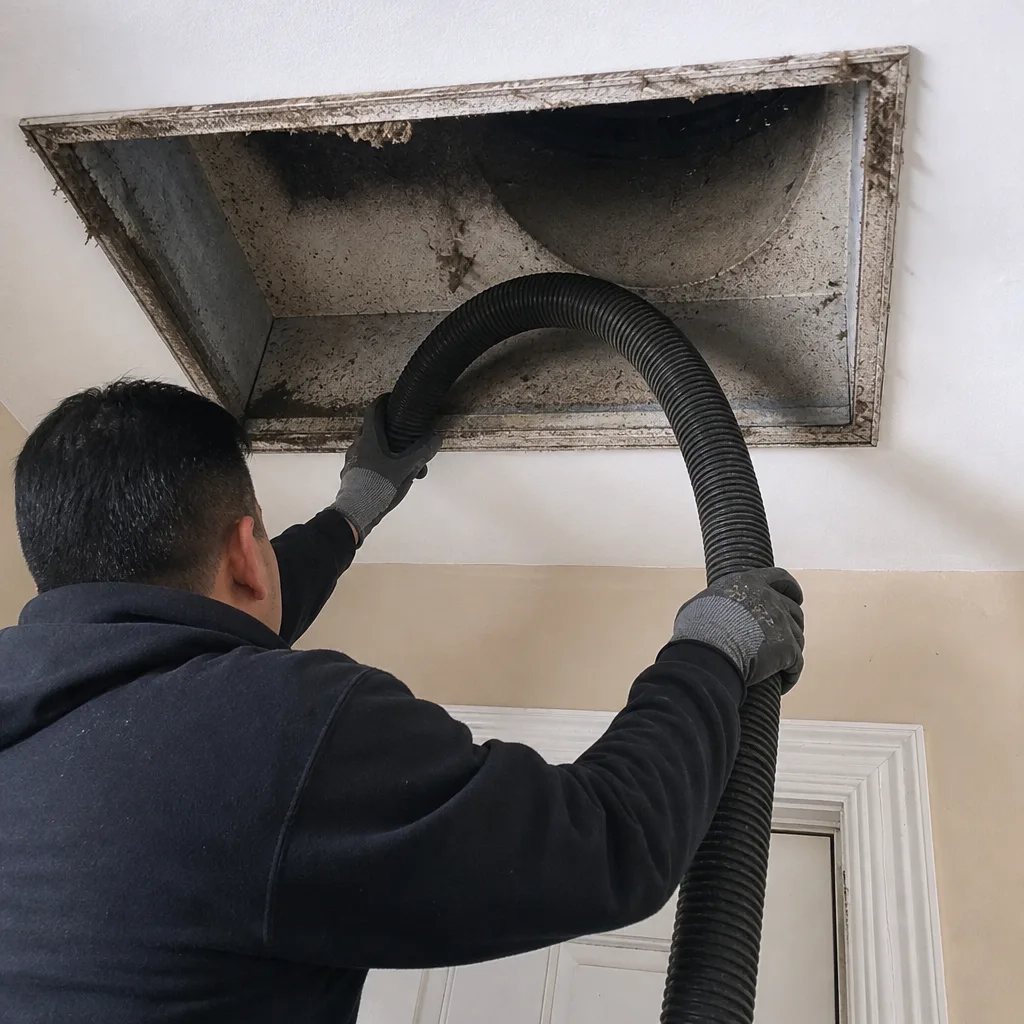 Before
 After
AfterWhen to Call a Professional
The decision to call a professional duct cleaning company in Brooklyn is not complicated, but it is specific. Call when the home has pets and the system has not been cleaned in three or more years. Call when a renovation is finished and the family is still finding construction dust on furniture a month later. Call when someone in the home has asthma or allergies and the visible registers show accumulated dust. Call when the home is older and the ducts may never have been cleaned. Call when a child is sleeping in a room served by unmaintained ducts. And call when the DIY attempts have already been done and the air quality has not improved, because that usually means the material is in the part of the system the consumer tools cannot reach. Mortons Air Duct Brooklyn home service offers free estimates to homeowners throughout Brooklyn, with a written price provided before any work begins. Call (607) 536-9605 to schedule an assessment.
Frequently Asked Questions
Professional air duct cleaning in Brooklyn typically costs between $450 and $900 for a full system, depending on the size of the home, the number of vents, and the age of the ductwork. The price is a whole-system figure, not a per-vent calculation, and a legitimate company will provide a written quote before any work begins. Call (607) 536-9605 for a free estimate on your specific Brooklyn home.
Cheaper quotes in Brooklyn are frequently structured around a per-vent price that is multiplied upward once the technician arrives, or they use consumer-grade tools that cannot clean the full system. A legitimate system-wide cleaning requires professional equipment, time, and trained labor, and a quote far below the $450 to $900 range almost always comes with either a surprise invoice or an incomplete outcome.
A shop vac and a brush can clean the visible portion of your registers and the first few inches of accessible duct, but they cannot reach the full length of the duct runs inside your walls. In older Brooklyn homes with flex duct, aggressive DIY brushing can also tear the inner liner and create leaks. DIY tools are useful for maintenance between professional cleanings, not as a replacement for them.
In a Brooklyn home, professional air duct cleaning is generally recommended every three to five years, with more frequent service for homes with multiple pets, recent renovations, or occupants with asthma or allergies. See our Seasonal Air Duct Cleaning Care for Brooklyn: Year-Round Homeowner’s Guide for a maintenance schedule tailored to the borough’s climate. Homes with radiators only and no central air have no duct system to clean and do not need this service. The interval can be extended with consistent filter replacement and register maintenance.
A professional duct cleaning company in Brooklyn should provide visual proof of the work. At Morton’s, every completed job includes a photo of the clean-up before the crew leaves, along with access to the technician for questions about what was found and what was done. A service that offers no verification and no documentation is not one to repeat.
Duct cleaning is a maintenance service, not a medical treatment. Even without pets or allergies, a Brooklyn home’s ducts accumulate dust from outside air, cooking residue, and normal household activity. After five or more years without service, that accumulation is visible and measurable. The question is not whether a home without allergies needs it, but whether the system has ever been cleaned and how many years of material it is carrying. Call (607) 536-9605 to discuss your specific situation and get an honest recommendation.
The Bottom Line
The DIY duct cleaning decision in Brooklyn resolves to one fact: the tools available to a homeowner cannot reach the part of the duct system that matters most. What you can reach is the visible register and the first few inches of duct. What matters is the forty feet inside the wall, the plenum above the furnace, the return drop, and the coil, and none of those are accessible with a shop vac. DIY maintenance keeps a system cleaner between professional visits. It does not replace the visit. The smart approach for a Brooklyn homeowner is to budget for professional cleaning every three to five years, maintain filters and registers in between, and when the day comes, hire a company that writes the price down before the work starts and proves the work with a photo when it’s done.
Written by Paul Adeyemi, Owner at Mortons Air Duct Brooklyn, serving Brooklyn since 2005.