
Last updated October 15, 2026
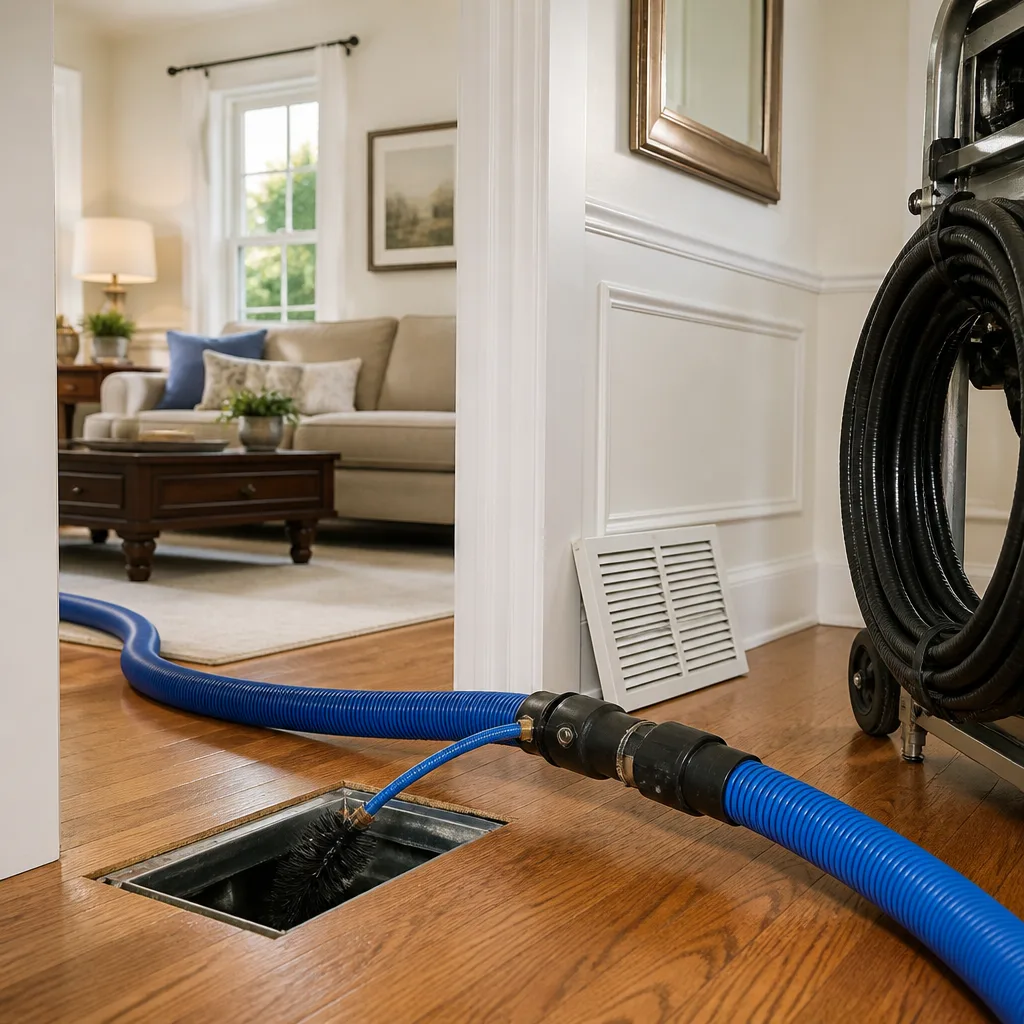 Whole-home duct cleaning
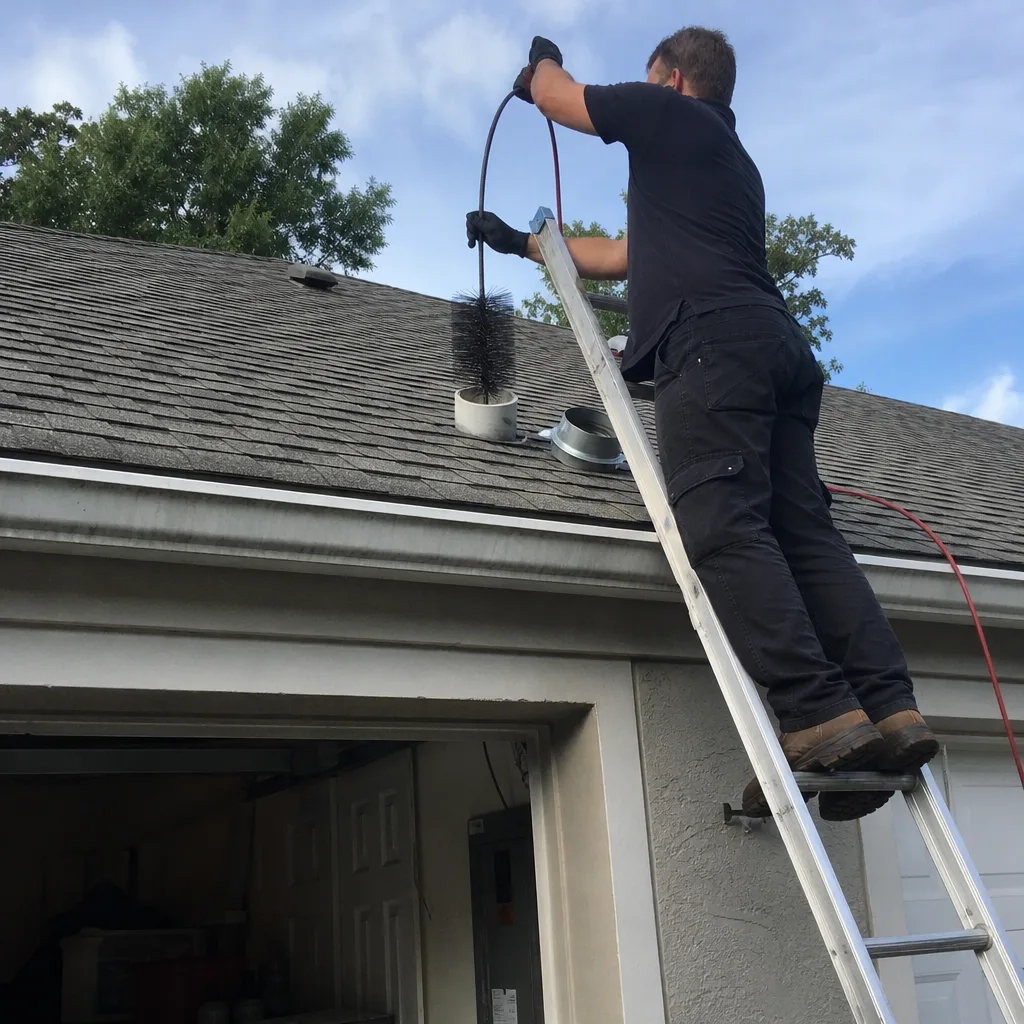
 Dryer vent cleaning
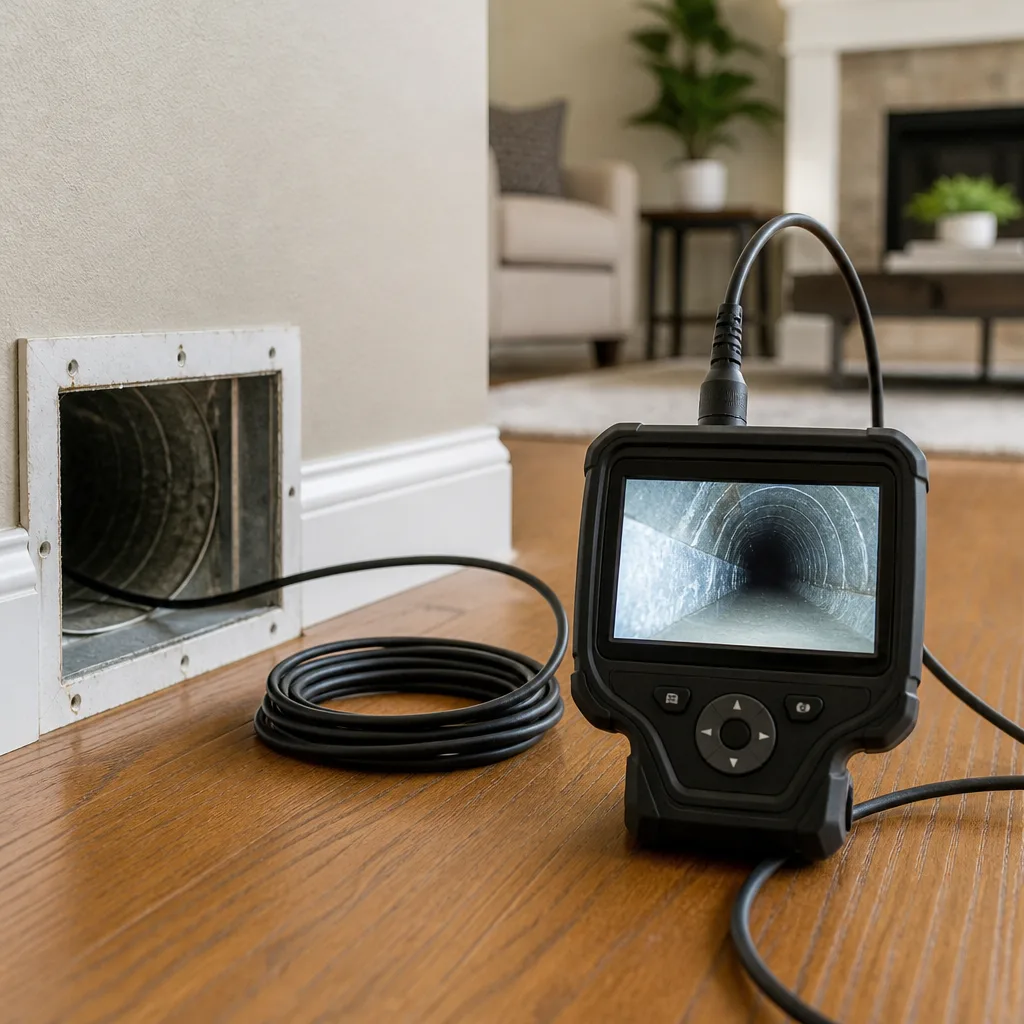 Camera inspection
 Sanitizing & deodorizing
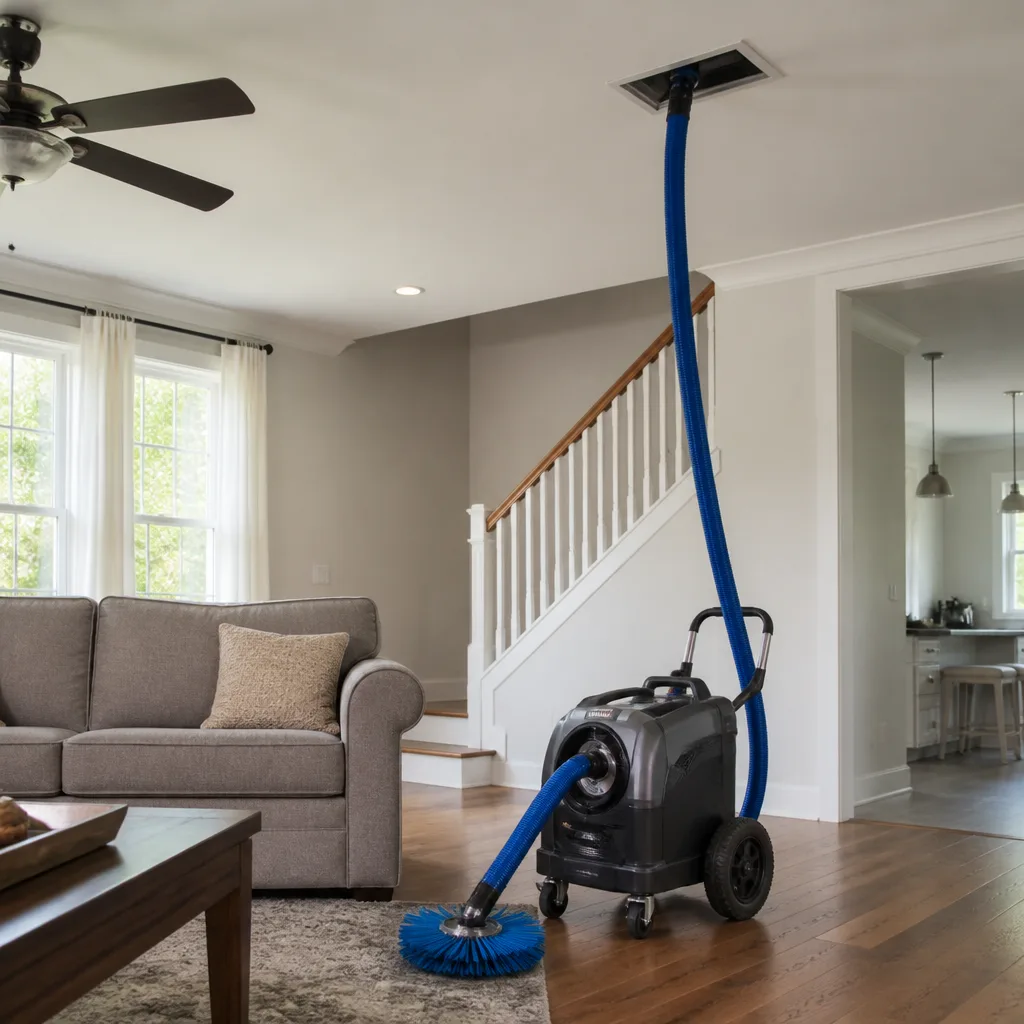
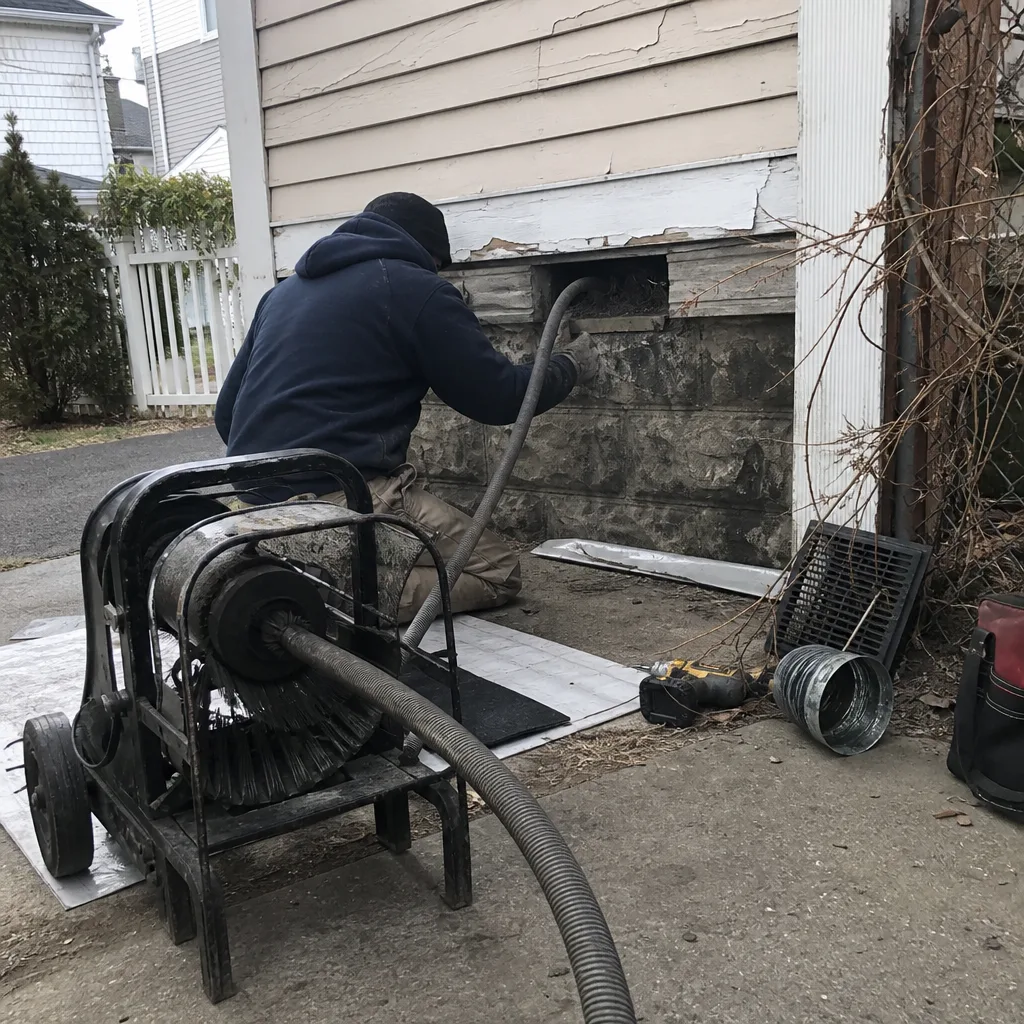
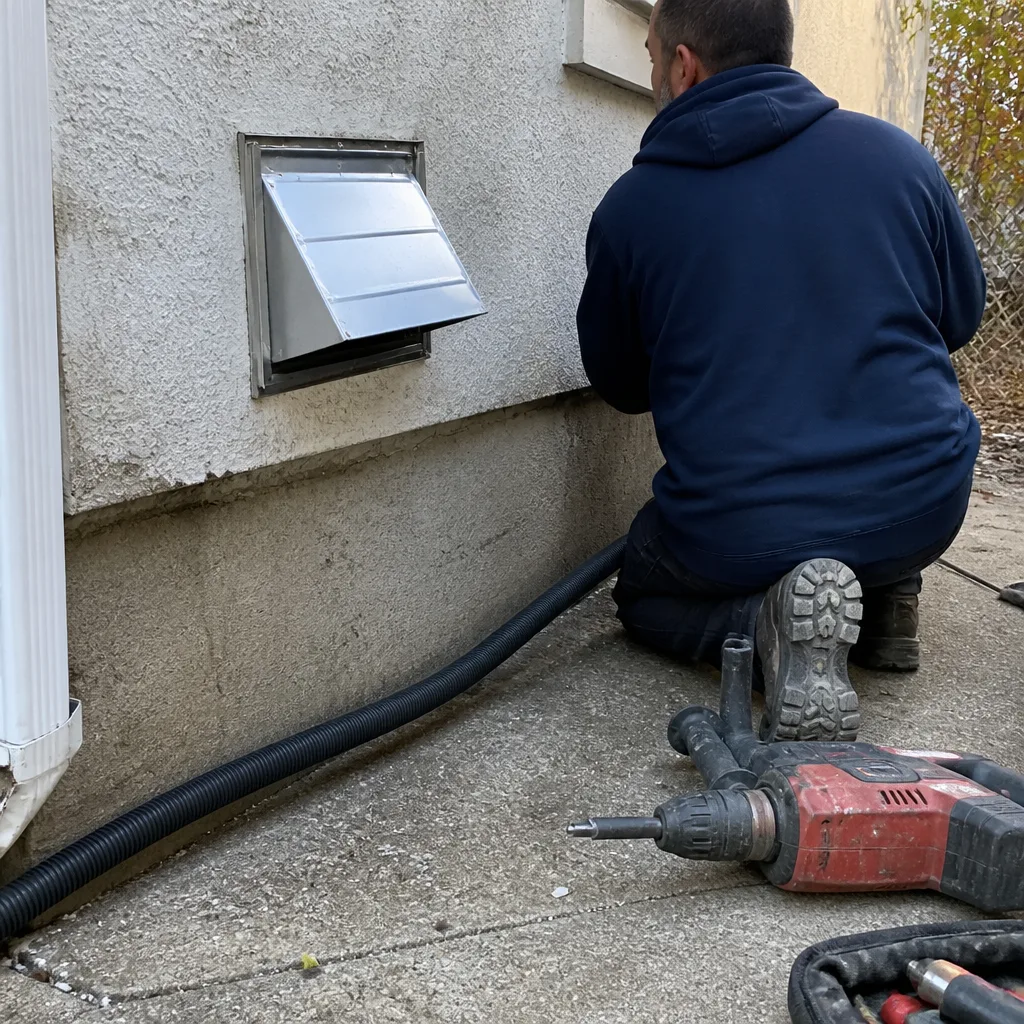
Whole-system duct and dryer vent check with before-and-after photos - you see exactly what came out of your vents
That "$99 whole-house special" is a bait ad - the real number appears once they are in your hallway, or the "clean" is a shop-vac at the register. We photograph the inside of your ducts before and after instead.
Air Duct Cleaning Permits, Codes & Inspections in NY: What You Need to Know
No permit is required to clean your air ducts in New York. A permit may absolutely be required for what a technician finds inside them, and confusing those two things has cost Brooklyn homeowners real money at closing. We’ve watched this exact scenario unfold in Park Slope and Bay Ridge: a seller assumes the duct work done three years ago was routine maintenance, the buyer’s attorney asks for records, and suddenly a $400 cleaning job becomes a $4,000 negotiation over undocumented modifications. This guide-and our The Complete Guide to Air Duct Cleaning in Brooklyn-walks you through the precise line between cleaning and permitted work under NYC Department of Buildings rules, what documentation actually matters, and how to protect yourself whether you own a brownstone or a condo in a multifamily building.
Quick Answer
Air duct cleaning itself requires no permit anywhere in New York State, including Brooklyn. However, duct replacement, duct sealing that alters system airflow, or any modification to a building’s mechanical ventilation system may require a permit from the NYC Department of Buildings (DOB). Before any contractor starts work, ask them to confirm in writing whether the scope includes only cleaning, and request a written invoice describing exactly what was done. That one piece of paper matters more than you’d think when you sell your home or file an insurance claim.
Styles & brands we work with
Table of Contents
- The Line Between Cleaning and Permitted Work Under NYC DOB Rules
- When a Permit Is Actually Required for Duct Work
- NYC Local Law 87, Energy Audits, and What They Mean for Duct Systems
- EPA Guidance vs. NYC Code: Why National Standards Don’t Match Brooklyn’s Older Buildings
- Questions to Ask Any Contractor Before Duct Work Begins
- What Documentation You Should Receive and Keep
- What Home Inspectors and Buyers’ Attorneys Look For at Closing
- How Duct Cleaning Records Affect Insurance Claims
The Line Between Cleaning and Permitted Work Under NYC DOB Rules
Here’s the distinction that Brooklyn homeowners routinely get wrong: cleaning is maintenance. Modification is construction. Under NYC Administrative Code and DOB regulations, routine maintenance of existing mechanical systems, which is what air duct cleaning legally is, does not require a building permit. You can clean every duct in a five-story Park Slope townhouse tomorrow and the DOB will never need to know. The moment a technician proposes to replace a section of ductwork, reroute a run, install a new return, or seal ducts in a way that changes static pressure or airflow design, you’ve crossed from maintenance into alteration. Alterations to mechanical ventilation systems fall under DOB permit jurisdiction, specifically the mechanical work category in the NYC Building Code. The practical line we tell our Brooklyn customers: if the only thing leaving your house is dust, no permit is needed for our Air Duct Cleaning services. If ductwork is being cut, removed, or added, ask for a permit number.
What surprises most people is that this line isn’t about how big the job is. A single eight-foot section of rusted return duct replaced in a Boerum Hill brownstone can technically require a permit, while a full-system cleaning that takes four hours never will. It’s about what the work changes. Cleaning restores the system to its existing state. Replacement or modification changes the system. Brooklyn’s housing stock makes this especially relevant: much of the borough’s ductwork in prewar buildings is wrapped in asbestos-containing insulation, and disturbing that material during duct replacement triggers entirely separate environmental regulations and work practice requirements. What starts as a “quick duct replacement” can become an asbestos abatement project that requires licensed professionals and notifications to the NYC Department of Environmental Protection.
We’ve been cleaning ducts in Brooklyn since 2005, and we’ve learned to flag this before we ever start. If we see rusted-through duct sections, disconnected runs, or evidence of prior unpermitted modifications, we tell the homeowner exactly what we found and what it means before recommending any next step. That’s the Cedarwell Care Promise working as it should: a written explanation, no pressure, and the customer making an informed call.
When a Permit Is Actually Required for Duct Work
Let’s get specific, because “potentially permitted work” is the kind of phrase that helps no one. Under the NYC Building Code, the following scenarios typically require a DOB permit filed by a licensed master plumber, licensed electrician, or registered architect/engineer, depending on the work:
- Duct replacement involving new materials. Removing and replacing any section of sheet metal or flexible duct is an alteration, not maintenance. Even a three-foot repair section technically requires a permit if it changes the system’s dimensions or materials.
- Adding a new return or supply run. If a bedroom in a Kensington row house has always been cold in winter and someone proposes running a new duct branch to it, that’s new mechanical work requiring a DOB application.
- Rerouting existing ductwork. Moving a duct run to accommodate a renovation, ceiling change, or structural repair triggers the permit requirement.
- Duct sealing that materially changes airflow. This one’s fuzzy, but be honest: sealing a few minor gaps at joints during cleaning is maintenance. Applying aerosol sealant across an entire system to change leakage rates is a modification of system performance and can trigger the permit question.
- Any work that involves opening walls, floors, or ceilings to access ductwork. The moment you’re opening building cavities, you’re in alteration territory under DOB rules, and other permit requirements (electrical, plumbing, structural) may also apply.
- Replacement of an entire HVAC system. If the furnace, condenser, and duct distribution get replaced together, it’s a mechanical alteration requiring a permit, full stop.
What about repairs? A small patch on a pinhole leak in a duct seam is generally considered repair, not alteration, and most DOB inspectors would not treat it as permitted work. The practical test we use: does the repair restore the duct to its prior function and configuration? If yes, it’s a repair. If the repair involves removing and replacing a duct section or changing its path, it’s borderline, and in Brooklyn’s stricter enforcement climate, we advise treating borderline cases as permitted work. The downside of getting it wrong is too expensive to ignore.
NYC Local Law 87, Energy Audits, and What They Mean for Duct Systems
Brooklyn multifamily building owners have an extra set of rules to navigate that single-family homeowners don’t face. NYC Local Law 87 requires buildings over 50,000 square feet to undergo an energy audit and retro-commissioning every ten years. The energy audit examines building systems, including ventilation and air distribution, and the resulting report often includes findings about duct condition: leakage, poor insulation, disconnected runs, or accumulated debris affecting airflow.
Here’s what building owners in Downtown Brooklyn, Williamsburg, and Fort Greene should know: a Local Law 87 audit finding about duct leakage doesn’t automatically require a permit to address. If the remediation is cleaning and minor sealing at accessible joints, it’s maintenance. But if the audit report recommends duct replacement or major sealing to achieve energy savings, and the owner proceeds with that work, the permit requirement kicks in under DOB mechanical alteration rules. We’ve seen condo boards in Brooklyn Heights discover this the hard way when a well-meaning maintenance contractor replaced several riser ducts during a routine project without pulling permits, and the board only found out during a later refinancing when the lender’s engineer flagged it. The fix cost far more than the original work.
Local Law 87 compliance deadlines are scheduled by block number, so if your building’s Energy Efficiency Report is due and includes duct findings, you have leverage to address them properly. The key takeaway: if you’re a multifamily owner or board member, keep the Energy Efficiency Report and any duct-related work invoices together. That documentation demonstrates that you addressed audit findings, whether through cleaning or permitted replacement.
EPA Guidance vs. NYC Code: Why National Standards Don’t Match Brooklyn’s Older Buildings
The EPA publishes guidance on air duct cleaning that’s often cited by national cleaning franchises as if it were law. It is not, and the distinction matters in Brooklyn. The EPA’s guidance document “Should You Have the Air Ducts in Your Home Cleaned?” is advisory. It describes when cleaning might be appropriate, what methods exist, and what to expect. It has no enforcement power, no permit requirements, and no compliance deadlines.
NYC building code is different. It’s enforced by the DOB with real penalties for noncompliance, and Brooklyn’s older building stock, much of it built before mechanical ventilation was standardized, creates conditions the EPA guidance never addresses. Consider a 1920s six-story walk-up in Bed-Stuy with original masonry shafts retrofitted decades ago for forced air. The EPA document describes cleaning modern sheet metal duct systems. It doesn’t discuss asbestos wrapping on prewar ducts, NYC fire code requirements for shaft penetrations, or DOB rules about alterations to landmarked facades when vent terminations need to change. National guidance and Brooklyn reality diverge, and anyone quoting EPA guidelines as the final word on duct work in New York City is missing the more important half of the story.
One more layer: New York State has its own mechanical code, and NYC has modified that code for local conditions. The hierarchy is: federal guidance (advisory only), state code, city code, and DOB administrative enforcement. When there’s a conflict, city code wins in Brooklyn. If you’re hiring a contractor who says “we follow EPA standards,” that’s fine as far as it goes, but ask them about NYC DOB permit requirements too. If they can’t answer that question clearly, keep looking.
Questions to Ask Any Contractor Before Duct Work Begins
We’ve written this list as if we’re the customer, because these are the exact questions we’d want answered before anyone touches our own ductwork. A legitimate Brooklyn contractor will answer every one of these without hesitation.
- “Does any part of this work require a DOB permit?” Ask it exactly that way. If the answer is yes, ask for the permit application number and the name of the licensed professional who will file it. If the answer is no, ask them to confirm in writing that the entire scope is maintenance only.
- “What documentation will I receive when the work is done?” You want a written invoice describing the work in detail, not a credit card receipt that says “duct service.” A proper invoice lists what was cleaned, what was replaced, the equipment used, and the date.
- “Will you provide before-and-after photos?” At Mortons Air Duct Brooklyn, we photograph the work before and after as standard practice, and you should expect the same from any reputable firm. Visual proof protects you at closing and in insurance claims.
- “What equipment are you using?” Genuine professional equipment matters. We use Rotobrush, Nikro, and Abatement Technologies systems because they perform, but the point is to hear the contractor name actual brands rather than describe “industrial-grade vacuums.” Vague answers are a red flag.
- “Are your technicians employees or subcontractors?” Background-checked, uniformed employees who work under a company’s care standards behave differently than day-labor subs. In Brooklyn, where you’re letting strangers into your apartment while your kids are at school, this question is not rude.
- “What happens if I’m not satisfied with the work?” If the contractor stumbles on this one, you’ve learned something important. A firm that stands behind its work can explain its guarantee in one sentence. We can: if it’s not done right, we make it right, for 365 days.
What Documentation You Should Receive and Keep
Here’s a habit that will save you money: treat duct work documentation the way you treat your property deed. Keep it forever. Here’s the specific paperwork that matters to a Brooklyn homeowner:
- A detailed written invoice. It should show the company name, address, phone number, date of service, scope of work, equipment used, and total price. Morton’s provides a written price before any work starts, and the final invoice matches. That’s the Cedarwell Care Promise in action.
- Before-and-after photos. These are your proof of condition at the time of service. If you sell your home and the buyer’s inspector flags duct issues, photos from a professional cleaning dated six months earlier are powerful evidence that the system has been maintained.
- Any permit documents. If work required a permit, keep the permit number, the filed application, and the sign-off or certificate of completion from DOB. Incomplete or missing sign-offs are exactly what buyers’ attorneys flag at closing.
- Local Law 87 Energy Efficiency Reports. For multifamily owners, this document is part of the building’s compliance record. Keep it with your other building filings.
- Any asbestos or environmental testing results. If duct work in an older Brooklyn building required asbestos assessment or abatement, the lab reports and abatement completion notices are non-negotiable documents to retain.
We tell our customers to keep all of this in a single folder, physical or digital. When you sell your home or refinance, you’ll be glad you did. We’ve seen clean documentation turn a buyer’s objection into a non-issue in under an hour.
What Home Inspectors and Buyers’ Attorneys Look For at Closing
When a Brooklyn property changes hands, the buyer’s home inspector will likely examine the visible portions of the duct system: registers, accessible runs in basements or crawlspaces, and the air handler. They’re looking for rust, disconnected runs, evidence of water damage, and accumulated debris visible without opening walls. If they find significant issues, the buyer’s attorney may request documentation of past duct maintenance or improvements. This is where most sellers realize they should have kept better records.
What attorneys specifically ask for: invoices from any HVAC or duct contractor who worked on the property, permit numbers for any mechanical alterations, and evidence that any Local Law 87 findings were addressed. If you can produce a detailed invoice and before-and-after photos from a professional air duct cleaning in Brooklyn, the conversation usually shifts from “the seller hid a duct problem” to “the system has been properly maintained.” If you can’t produce anything, the buyer may demand a cleaning credit, a repair escrow, or in some cases, a price reduction. None of those are outcomes sellers want.
The residential contract of sale in New York includes representations about the condition of mechanical systems, and a smart seller thinks through what they can prove, not just what’s true. Documentation is proof. In Brooklyn’s competitive but title-picky market, where every dollar of contract credit matters, a folder full of clean invoices and photos is a negotiating asset. We’ve had customers email us years after a cleaning asking for duplicate invoices for exactly this reason, and we’re glad to provide them.
How Duct Cleaning Records Affect Insurance Claims
Insurance claims are the other arena where documentation saves money. If you file a claim for water damage affecting your ducts, or a fire in a dryer vent, or mold remediation in ductwork, the adjuster will ask about maintenance history. Show them a dated invoice from a professional cleaning and you’ve established two things: you maintained the system, and the condition predates the event. Show them nothing and you’ve left room for the adjuster to argue lack of maintenance contributed to the damage, which can reduce or deny coverage.
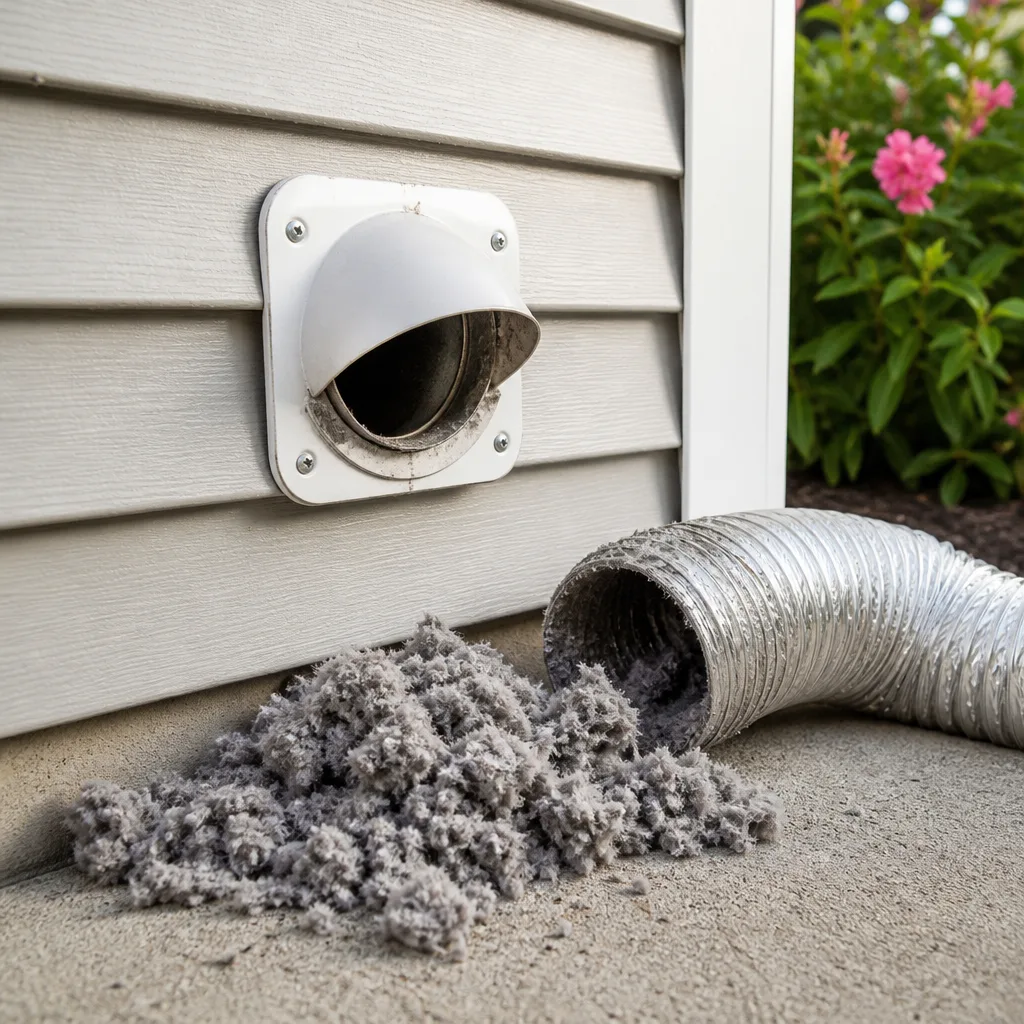
Dryer vent cleaning deserves special mention here. Lint-clogged dryer vents are a leading cause of house fires in Brooklyn, and insurance companies know it. If you file a claim related to a dryer fire and can’t document when the vent was last cleaned, expect scrutiny. We clean dryer vents using professional equipment, and we photograph the before and after for exactly this reason. The 365-Day Done Right Promise applies here too: if the work isn’t right, we come back and make it right.
One more insurance note specific to New York: if anyone performs work on your property that required a permit and no permit was pulled, that fact can become an issue in a future claim, even if the unpermitted work wasn’t directly related to the loss. It’s one more reason to ask the permit question before the work starts, not after.
Common Mistakes to Avoid
- Assuming “clean” and “repair” are the same thing legally. They’re not. Cleaning requires no permit. Repair or replacement of duct sections may require one, and if you don’t ask, your contractor may not tell you. Get the scope in writing before work begins.
- Hiring a low-priced contractor with no physical Brooklyn address. If a contractor operates only out of a phone number and shows up in a rental van with a portable shop vac, they’re not doing professional duct cleaning. Real equipment from brands like Rotobrush and Nikro costs real money, and the price reflects that. A “whole house for $99” offer should raise every red flag you have.
- Losing the invoice after the job. The invoice is the document that proves maintenance when you refinance, sell, or file an insurance claim. Keep it. A surprising number of Brooklyn homeowners can’t find their duct cleaning records from two years ago because they never received a proper invoice in the first place.
- Accepting before photos without after photos. Sellers’ attorneys and insurance adjusters both look for evidence that work was actually completed. A contractor who can’t show you after photos of your own ducts is a contractor whose work you can’t verify. At Mortons, every job includes a photo of the clean-up before the crew leaves, and the same standard applies to the duct work itself.
- Treating Local Law 87 as optional. Multifamily building owners who ignore audit deadlines face DOB penalties. If your Energy Efficiency Report flags duct issues and you don’t address them, you’re compounding the compliance problem. Address findings and keep the paperwork.
- Confusing EPA guidance with enforcement. The EPA does not regulate duct cleaning and cannot penalize you for dirty ducts. The DOB can penalize you for unpermitted mechanical work. Know which agency has power over what.
- Letting duct issues fester until closing. If you’re planning to sell a Brooklyn home in the next year, schedule a professional cleaning now, get the invoice and photos, and let the system documentation accumulate. Trying to schedule cleaning during escrow adds stress and raises questions about why it wasn’t done sooner.
See the difference
 Before
 After
After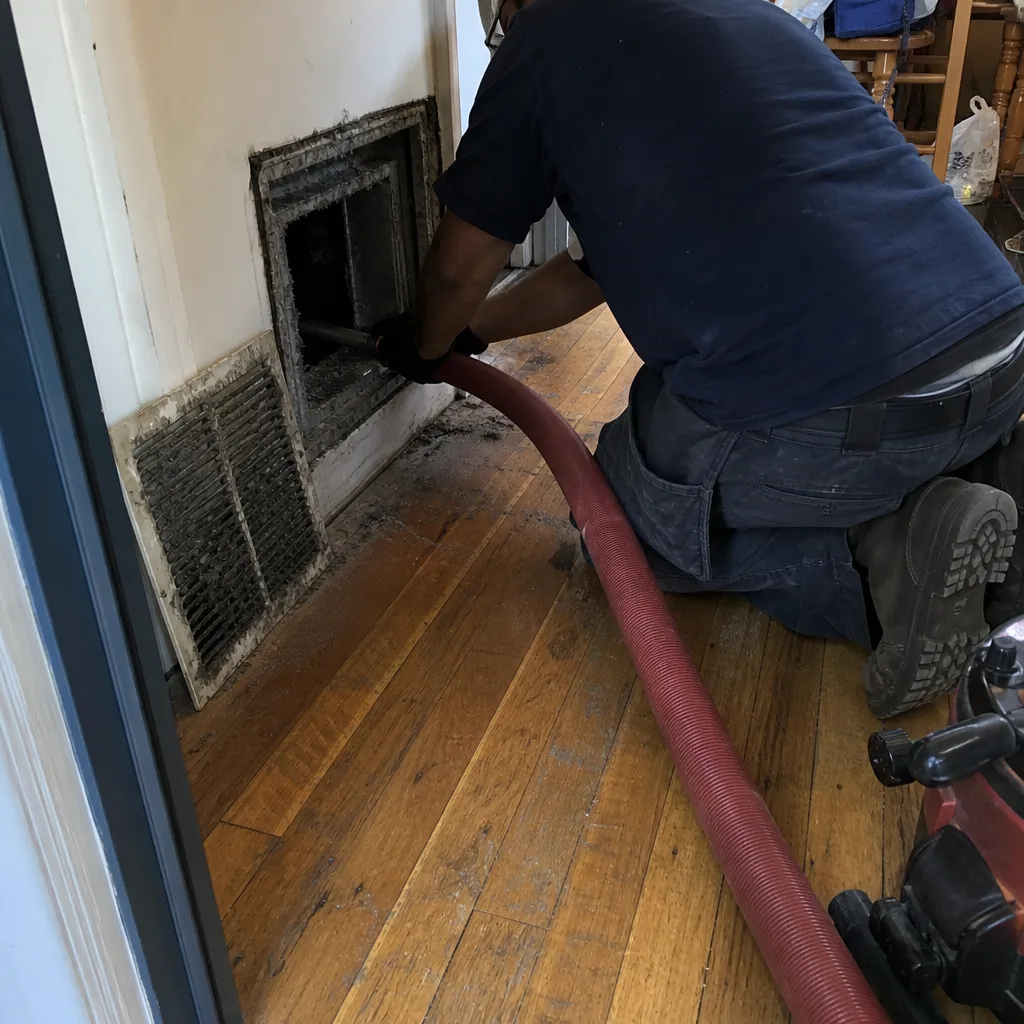 Before
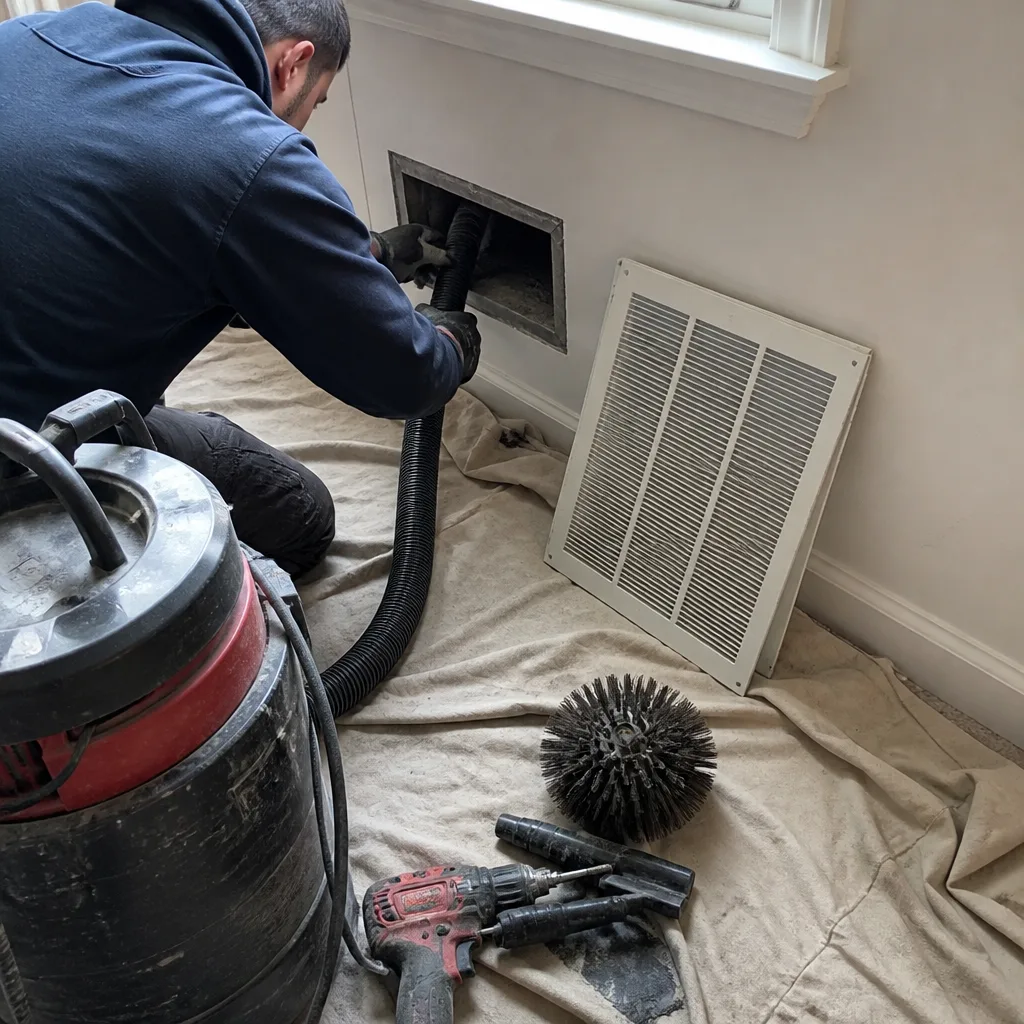 After
After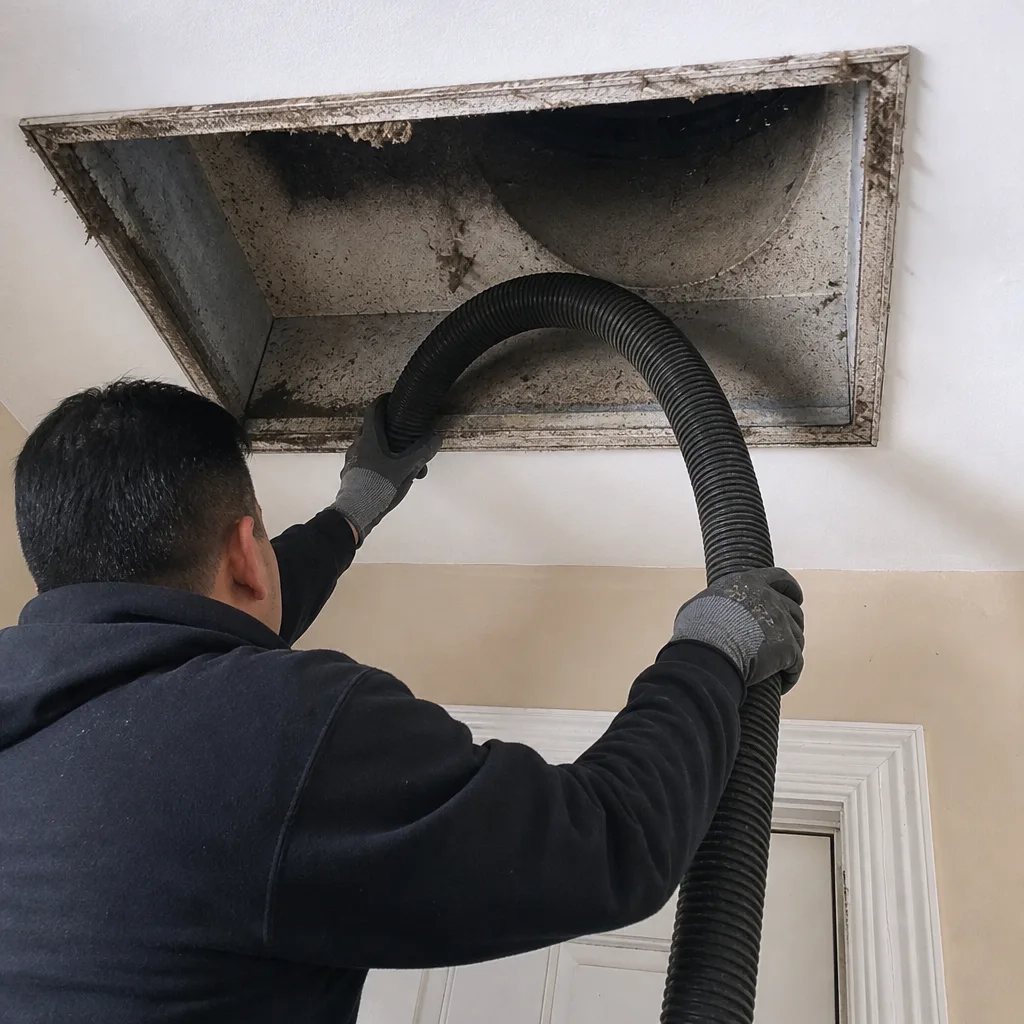 Before
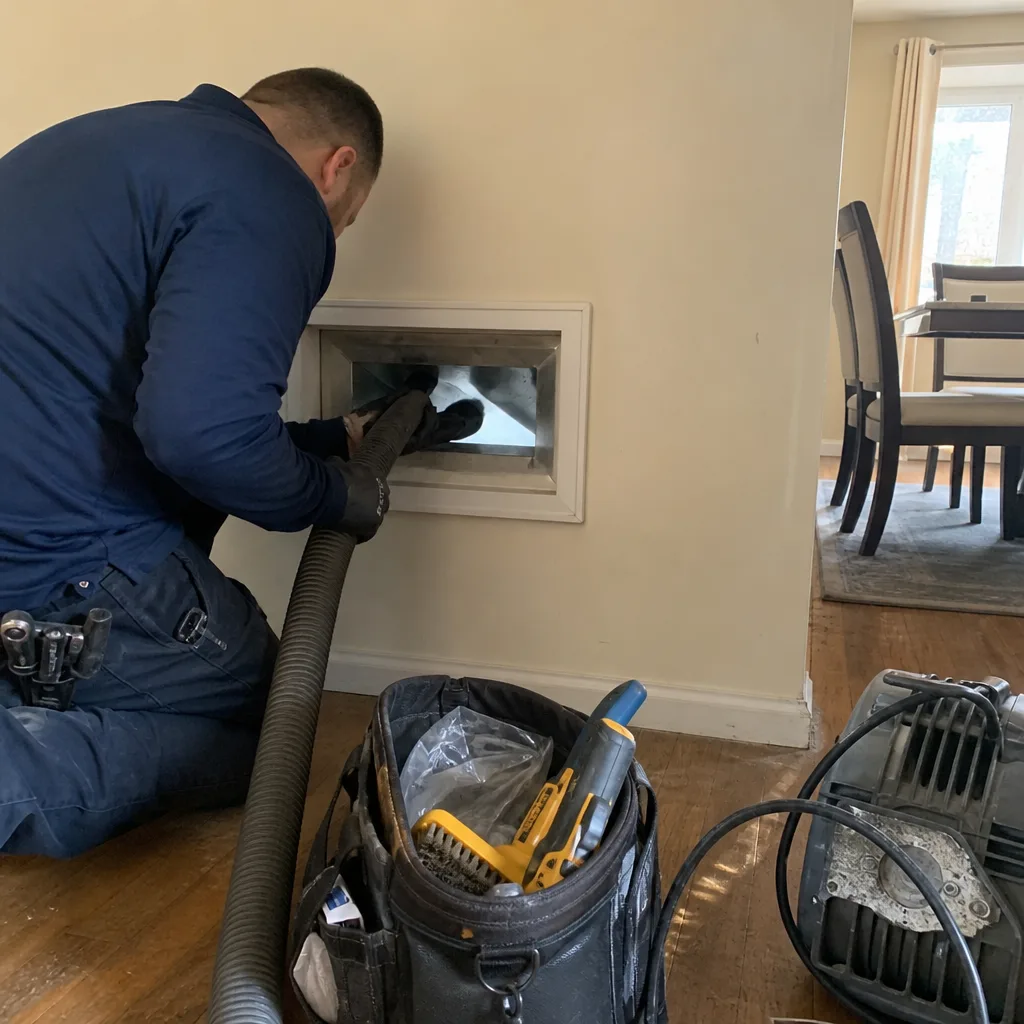 After
AfterWhen to Call a Professional
Call a professional when you can see dust blowing from registers, when rooms smell musty after the HVAC has been running, when your energy bills have climbed without explanation, or when you’ve just moved into a Brooklyn home and have no idea when the ducts were last cleaned (see our Air Duct Cleaning Warning Signs: A Brooklyn Homeowner’s Reference Guide for more). Call one before you list your home for sale, even if everything seems fine, because the documentation will serve you at closing. And call one if you’re a property manager or condo board member whose building has a Local Law 87 audit pending. At Mortons Air Duct Brooklyn, we offer free estimates for air duct and dryer vent cleaning across Brooklyn, and we answer every call with a live person, 24/7. Reach us at (607) 536-9605.
Frequently Asked Questions
No. Air duct cleaning is classified as routine maintenance under NYC Building Code and does not require a DOB permit. A permit is only required when ductwork is replaced, altered, or added, which is a different category of work. If a contractor tells you a permit is needed for cleaning alone, ask them to show you the specific code provision, because there isn’t one. For a professional cleaning in Brooklyn, call Mortons Air Duct Cleaning and we’ll explain the entire scope, and its permit status, before we start.
In Brooklyn, professional air duct cleaning for a typical single-family home or apartment runs between $450 and $900 for the full system, depending on the number of units, access difficulty, and degree of contamination. Multifamily buildings and larger systems run higher. Anyone quoting $99 for “whole house” cleaning is not doing what we do: the equipment, training, and insurance behind real duct cleaning can’t be provided at that price. Morton’s provides a written price before any work starts, so you’ll know the exact cost before we arrive. Call (607) 536-9605 for a free estimate and we’ll give you a number you can actually plan around.
Cheaper quotes usually mean cheaper equipment, fewer steps, and no guarantee. A contractor using a portable vacuum with a rotating brush attachment is providing a different service than a crew using Rotobrush or Nikro truck-mounted or HEPA-filtered equipment. Cheap quotes also tend to lead to “upsell on arrival” pricing, where the tech finds “mold” or “leaks” and the $99 quote becomes an $800 invoice on the spot. Morton’s quotes a flat price for the system in writing before the work starts, and that’s the price you pay. If you’d like to see what’s actually included in a professional dryer vent cleaning, call us and we’ll walk you through it line by line.
You should receive before-and-after photos of your own duct system, not stock images, plus a detailed invoice describing the work. Without photos, you’re taking the contractor’s word for it, and some Brooklyn homeowners have learned that’s not worth much. At Mortons Air Duct Brooklyn, we photograph the interior of the ducts during the job and provide the images to you, along with a photo of the clean-up before we leave. If you can’t verify the work visually, you can’t prove it later, and proof is what matters at closing and in insurance claims.
For most Brooklyn households with kids and pets, every three to five years is appropriate. Homes with multiple pets, recent renovation dust, smokers, or family members with severe allergies may benefit from more frequent cleaning, every two to three years. If you’ve just completed a renovation in a Brooklyn co-op or brownstone, clean soon after the contractor leaves: construction dust gets pulled into the return ducts and redistributed for months. The honest answer is that frequency depends on conditions you can see, not a marketing calendar.
No specific document is legally required for duct cleaning at closing, but having a detailed invoice and before-and-after photos is strongly advisable. Buyers’ attorneys in Brooklyn increasingly ask for maintenance records when an inspector flags any HVAC concern, and documentation of recent professional cleaning often resolves the issue without credit negotiations. If you plan to sell within a year, schedule cleaning now and file the paperwork. Mortons Air Duct Brooklyn has been cleaning ducts across the borough since 2005, and we’re happy to provide duplicate invoices for any past service.
The Bottom Line
Cleaning your air ducts in Brooklyn requires no permit, but the work your ducts might need beyond cleaning can. The distinction matters at closing, in insurance claims, and in building compliance. Ask every contractor the permit question directly, get the answer in writing, and keep your invoice and photos. If a scope of work crosses into permitted territory, work with a licensed professional who can file with the DOB. For everything else, a thorough, documented cleaning from a Brooklyn company that provides a written price upfront and stands behind the work with a 365-Day Done Right Promise is all the compliance you need. Explore more guides & resources on our blog.
Written by Paul Adeyemi, Owner at Mortons Air Duct Brooklyn, serving Brooklyn since 2005.